

A V5C, or log book, is the DVLA document that records who the registered keeper of a vehicle is, plus the car’s key details. It is not proof of ownership. You need it to tax a car, to sell it, and to tell the DVLA when the keeper, your name or address, or the car’s details change.
What Is a V5C?
A V5C is the vehicle registration certificate for a car, van or motorbike in the UK, usually called the log book. It is a red paper document issued by the DVLA, the Driver and Vehicle Licensing Agency, when a vehicle is first registered. It records who the registered keeper is and the key details the DVLA holds. The current red version dates from 2012, redesigned in April 2019; older blue-green V5Cs are still valid.
Registered Keeper or Owner: What Is the Difference?
The registered keeper is the person the DVLA has on record as responsible for the vehicle: taxing and insuring it, and answering for fines. The legal owner is the person or company who bought the vehicle.
Usually the keeper and owner are the same person. But if you buy a car on hire purchase or PCP, the finance company owns it until you have paid the final amount, even though you are the keeper and hold the V5C. A company car works the same way: the driver is the keeper, the employer the owner.
When you buy a used car, the V5C tells you who the keeper is, not who legally owns it, and it is not a receipt. Proof of ownership is the sales invoice, receipt or finance agreement. Our guides to PCP vs HP and how car finance works explain who owns the car under each type of finance.
What Does a V5C Show?
A V5C records:
- Registration number
- Make, model, body type and colour
- Fuel type and engine size
- VIN, the 17-character vehicle identification number
- Date of first registration
- Number of previous keepers
- Current keeper’s name, address and date acquired
- CO2 emissions and vehicle tax class
- The 11-digit document reference number for online services
It does not show: outstanding finance, write-off or salvage history, stolen status, accident history, service history, current MOT or tax status, or genuine mileage. A clean V5C does not mean a clean car, so check the car’s history before you buy.
What Are the Sections of a V5C?
| Part of the V5C | What it is for |
|---|---|
| Vehicle details | Make, model, colour, fuel, engine size, VIN, date of first registration. |
| Change my vehicle details | Use for colour, engine, fuel or body changes. Post the whole log book to DVLA. Free. |
| Selling or transferring to a new keeper | Fill in with the buyer on a private sale. Section 2 now, section 6 on older V5Cs. |
| Change my name or address | Section 3 now, section 6 on older V5Cs. Free; address online. |
| Selling or transferring to a motor trader | The trader completes their part; the seller keeps the yellow slip (V5C/3) as proof. |
| New keeper slip (V5C/2) | Give the green slip to the buyer at the sale. Section 6 now, section 10 on older V5Cs. The buyer taxes the car with its 12-digit number. |
Section numbers differ between V5Cs, so follow the printed headings on your document.
How Do You Change the Keeper When You Sell a Car?
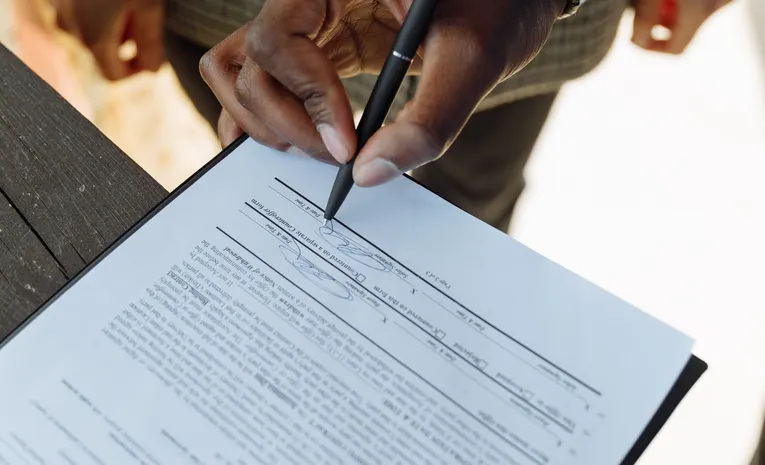
The seller tells the DVLA, not the buyer, on the day you hand over the keys. Until DVLA records the change, you stay the keeper on record and keep getting fines and tax reminders. Failing to tell the DVLA can mean a fine of up to £1,000.
The quickest way is online, using the GOV.UK service “Tell DVLA you’ve sold, transferred or bought a vehicle”. You need the 11-digit reference number from the latest V5C and the buyer’s name and address. DVLA confirms by email, and the buyer gets a new V5C within 5 to 7 working days. There is no fee. Give the buyer the green slip only.
By post, fill in the new keeper section, both sign it, and post the rest of the V5C to DVLA, Swansea, SA99 1BA. Give the buyer the green slip. The new log book can take up to 4 weeks this way.
Vehicle tax has not transferred with a car since October 2014, so the buyer must tax it before driving, or declare a SORN. The seller’s tax ends on the sale date and the DVLA refunds any full months left. Selling to a trader or scrapping uses the motor trader section instead. Our guide to trade-in vs private sale compares the two ways of selling.
Before you agree a figure, read our guide on how to negotiate the car price with a UK dealer.
What Do You Do If You Lose Your V5C?
| Situation | What to do | Fee | How long it takes |
|---|---|---|---|
| Lost, stolen or damaged, details unchanged | Apply online or by phone | £25 | 5 to 7 working days |
| Lost, stolen or damaged, details changed | By post, form V62 | £25 | After 4 weeks |
| New keeper, log book never arrived | Form V62 plus the green slip | Free with slip, else £25 | After 4 weeks |
| Name or address changed | Address online, name by post | Free | About 5 working days |
| Vehicle details changed | Use the change section of your V5C | Free | 2 to 4 weeks |
| Bought a car with no V5C | Form V62, plus green slip if you have one | £25 without a slip | Up to 6 weeks |
To apply online you must be the registered keeper, with the registration number, VIN and the name and postcode on the V5C. You cannot apply online if your details have changed or the car is on a DVLA fleet scheme or registered abroad.
If it has not arrived, call the DVLA on 0300 790 6802: after 2 weeks for an online or phone application, after 4 weeks for a postal one. After 6 weeks without telling the DVLA, another replacement costs £25. Form V62 is free from GOV.UK or a Post Office. Post it to DVLA, Swansea, SA99 1DD, with a £25 cheque or postal order payable to DVLA, Swansea.
Can You Buy a Car Without a V5C?
Yes, it is legal: the V5C is proof of registration, not proof of ownership. But a missing log book is a reason to slow down.
Check the VIN and that the seller’s name and address match the keeper on record. Run a history check for finance, write-off and stolen status: the V5C shows none of these. With the green slip, you can tax the car using its 12-digit number, then apply for a V5C with form V62.
If the seller has no V5C and no green slip, ask why before you pay: a missing log book is a common sign of a cloned car or a seller who is not the keeper. Check current used car prices before you agree a figure. Once it is yours, check whether GAP insurance is worth it.
Colour Changes and Wraps: Do You Need to Tell the DVLA?
Yes, if the main colour changes. A full respray or full wrap that changes the dominant colour must be notified to the DVLA, and it is free: write the new colour in the vehicle details section, sign it, and post the whole log book to DVLA, Swansea, SA99 1BZ. The updated V5C arrives in 2 to 4 weeks; you can drive meanwhile. Stripes, decals and roof wraps do not count while the main colour stays the same. Tell your insurer too: a colour change counts as a modification. Our guide to how much it costs to wrap a car covers the DVLA rules.
Frequently Asked Questions
How long does a new V5C take to arrive?
Usually 5 to 7 working days online, or after 4 weeks by post. Contact the DVLA after 2 weeks for an online application, or after 4 weeks for a postal one.
How much does a replacement V5C cost?
£25, online, by phone or by post with form V62. A new keeper with the green slip pays nothing.
Is the V5C proof of ownership?
No. It records the registered keeper, not the legal owner. On finance, the finance company owns the car until the final payment.
What is the green slip on a V5C?
The green slip is the new keeper supplement, the V5C/2. The buyer uses its 12-digit number to tax the car until the new V5C arrives.
Conclusion
The V5C has one job: telling the DVLA who is responsible for a vehicle. When you sell, tell the DVLA on the day and hand over the green slip. When you buy, check the VIN and the keeper, and run a history check. The log book will not warn you about finance, write-offs or theft.