
To get a full motorcycle licence in the UK, apply for a provisional licence, complete a one-day CBT course, pass the theory test, then pass Module 1 and Module 2 practical tests. At 24 you can go straight for a full Category A licence through Direct Access, or at 21 after two years on an A2 licence.
What Do You Need Before You Start?
Before you book anything, you need a provisional driving licence. You can apply from 15 years and 9 months old, and it costs £34 online or £43 by post, with processing typically taking 1 to 3 weeks. To qualify, you must be able to read a number plate from 20 metres away and have lived in the UK for at least 185 days (GOV.UK, blackcircles).
The route to a full licence has five steps, in this order:
- Apply for a provisional licence.
- Complete Compulsory Basic Training (CBT).
- Pass the motorcycle theory test.
- Pass the Module 1 off-road practical test.
- Pass the Module 2 on-road practical test.
What Are the Motorcycle Licence Categories?
Motorcycle licences come in four categories, and your age decides where you can start. The table below sets out each category, its limits and the minimum size of bike you must use for the test (GOV.UK).
| Category | Minimum age | What you can ride | Test bike |
|---|---|---|---|
| AM | 16 | Moped up to 50cc, maximum speed 45 km/h | Moped up to 50cc |
| A1 | 17 | Motorcycle up to 125cc, maximum 11kW and 0.1kW/kg | 120 to 125cc |
| A2 | 19 | Motorcycle up to 35kW and 0.2kW/kg, not derived from a bike with more than double its power | Minimum 245cc |
| A (full) | 24 by Direct Access, or 21 by progressive access | Any size motorcycle | Minimum 595cc, minimum 50kW, minimum 175kg |
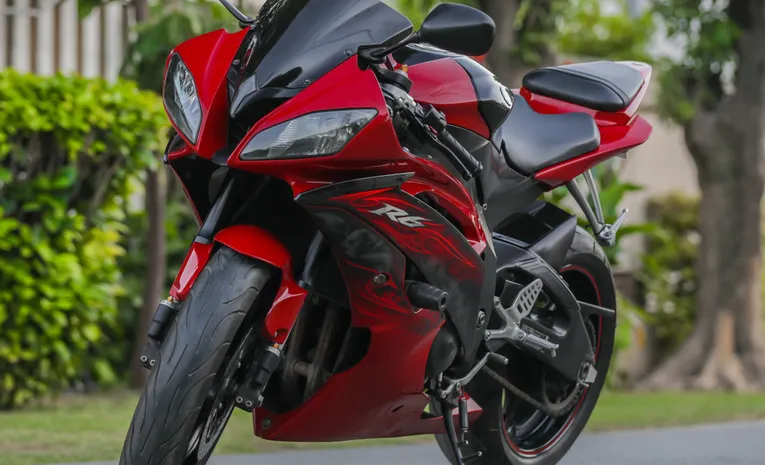
At 16 you can ride a moped, and at 17 a motorcycle up to 125cc. Our guide to what age you can ride a moped or motorcycle in the UK explains the age rules in full, and our A1 vs A2 motorcycle licence guide compares the two smaller full licences.
Step 1: Compulsory Basic Training (CBT)
Compulsory Basic Training, or CBT, is the starting point for every new motorcycle rider. It is a one-day course rather than a pass or fail test, and it teaches basic machine handling, road awareness and the skills you need to ride safely on your own. A CBT has five elements:
- Introduction and eyesight check
- Practical on-site training
- Practical on-site riding
- On-road theory preparation
- A minimum of 2 hours of on-road riding
When you finish, you receive a DL196 certificate, which is valid for 2 years. A CBT typically costs £130 to £170, although some schools charge £160 to £210 and London schools £180 to £260 (Devitt, maximomoto, getyourbikelicence, turkishriders).
With a valid CBT and L plates, you can ride a 50cc moped at 16 or a motorcycle up to 125cc at 17. You must display L plates, or D plates in Wales, and you cannot ride on motorways or carry a pillion passenger (GOV.UK, getyourbikelicence). If your CBT expires before you pass your full test, you must retake the whole CBT day (drivingapps).
Once you have your CBT, a 125cc bike is the usual first machine, so see our pick of the best 125cc motorbikes for beginners in the UK before you buy. One exception is worth knowing: if you hold a full car licence from before 1 February 2001, you can ride a 50cc moped without taking a CBT (phoenixmotorcycletraining).
Step 2: The Motorcycle Theory Test
The motorcycle theory test costs £23. It has two parts: 50 multiple-choice questions, which you pass with 43 correct answers, and a hazard perception test with 14 video clips, which you pass with 44 marks out of 75. Your pass certificate is valid for 2 years, and you must pass the theory test before you can book Module 1 (GOV.UK, blackcircles, drivingapps).
A car theory test does not count here. Even if you hold a full car licence, you must still pass the separate motorcycle theory test (getyourbikelicence).
Step 3: Module 1 and Module 2 Practical Tests
Module 1 is the off-road practical test, held at a test centre and lasting about 20 minutes. It costs £15.50. The exercises are taken in this order: wheeling the bike and using the stand, slalom and figure of 8, slow ride, U-turn, cornering and controlled stop, cornering and emergency stop, and cornering and hazard avoidance. For the emergency stop and hazard avoidance, you must ride through the speed measuring device at a minimum of 50 km/h, about 31 mph. You can have up to 5 rider faults (GOV.UK, drivingapps).
Module 2 is the on-road test, lasting about 40 minutes, with the examiner following you. It includes an eyesight check and a period of independent riding. It costs £75 on weekdays and £88.50 on evenings, weekends and bank holidays. You must pass Module 1 before you can take Module 2 (GOV.UK, blackcircles).
Electric bicycles are outside the motorcycle licence system, see how hub motors for e-bikes work.
Which Route Should You Take: Direct Access or Progressive Access?
There are two ways to reach a full Category A licence. Which one suits you depends mainly on your age and how quickly you want to ride a large bike.
| Route | Who it suits | How it works |
|---|---|---|
| Direct Access Scheme (DAS) | Riders aged 24 and over | Train and test on a large bike, minimum 595cc and 50kW, typically a 4 to 6 day intensive course (getyourbikelicence, Universal MCT) |
| Progressive access | Riders aged 17 to 23 | Start with A1 at 17, move to A2 at 19, then full A at 21 after holding A2 for 2 years; at each upgrade retake Module 1 and Module 2 but not the theory test |
Direct Access suits riders aged 24 and over who want to ride a large bike straight away, while progressive access suits younger riders, who build experience on smaller bikes and upgrade as they reach each milestone. If you already hold a car licence, check what size motorbike you can ride with a car licence before you book training.
How Much Does a Full Motorcycle Licence Cost?
The official test and licence fees are fixed, but training costs vary by school and location.
| Item | Typical cost |
|---|---|
| Provisional licence | £34 online, £43 by post |
| CBT | Typically £130 to £170 |
| Theory test | £23 |
| Module 1 | £15.50 |
| Module 2 | £75 on a weekday, £88.50 on evenings, weekends and bank holidays |
| DAS course | Typically £700 to £1,150 |
Add the official fees together and they come to £147.50 at minimum, based on a provisional licence at £34 online, the £23 theory test, Module 1 at £15.50 and Module 2 at £75 on a weekday (turkishriders).
DAS course prices vary widely. All-inclusive courses typically cost £700 to £1,150 (getyourbikelicence), from £790 at Phoenix, £1,090 to £1,590 in London (Universal MCT), £1,140 to £1,440 in Edinburgh and £1,200 to £1,350 in Warrington (Betta Biker).
Putting those figures together, a realistic all-in total for the Direct Access route is roughly £1,000 to £1,700, including the provisional licence, CBT, theory test and course. That is an estimate, not a fixed price: your school, your location and the number of training days you need will move the final figure.
Frequently Asked Questions
Can I ride a 125cc bike on a car licence?
No, you need a CBT first. The only exception is a full car licence from before 1 February 2001, which lets you ride a 50cc moped without a CBT.
How long does a CBT last?
Two years. If it lapses before you pass your full test, you retake the whole CBT day.
Can I skip the theory test if I already passed a car theory test?
No, the motorcycle theory test is separate and you must pass it before booking Module 1.
What happens if I fail Module 1?
You retake Module 1. You can only take Module 2 after passing Module 1.
Do I need my own bike for the tests?
No, training schools provide the bike and kit, and DAS courses include bike hire.
Related reading: explore the full licensing series, including what age you can ride a moped or motorcycle, what size motorbike with a car licence, and A1 vs A2 motorcycle licence.
Written by the Apriliapartsbuyer editorial team, covering UK motorcycle licensing and training guides.