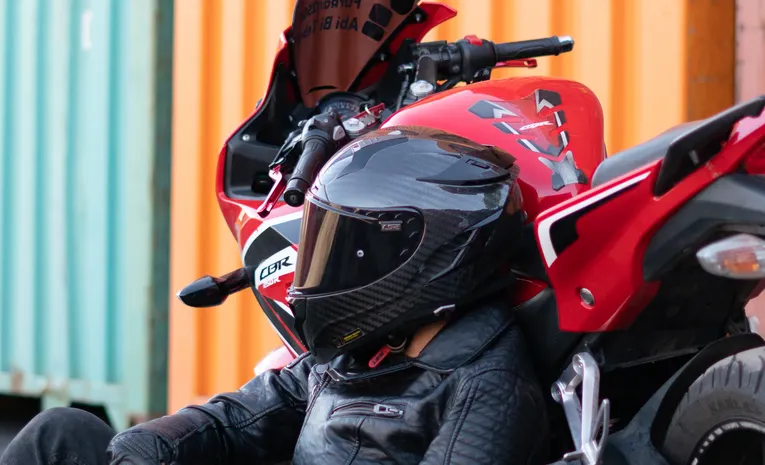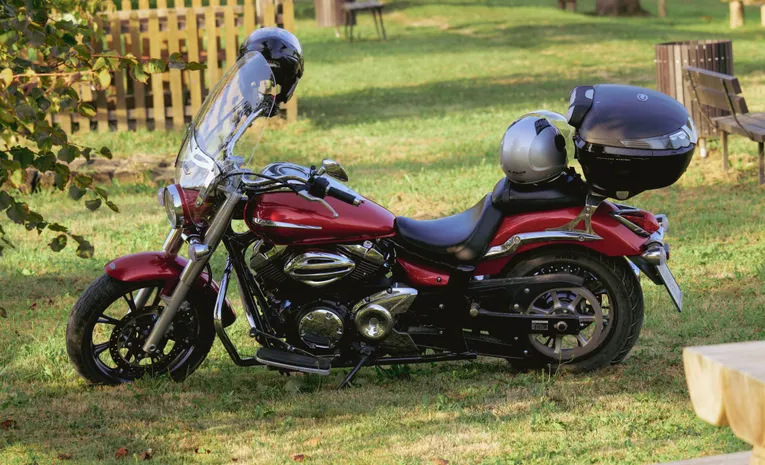

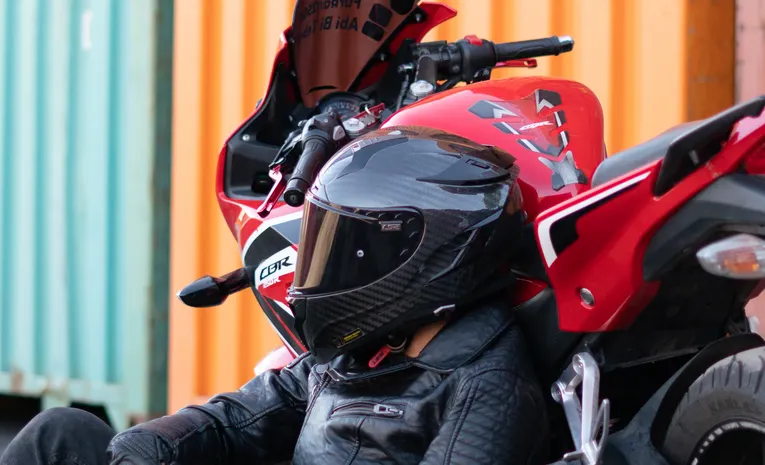
Only one item of motorcycle gear is required by UK law: a safety helmet. Everything else, jacket, gloves, trousers and boots, is recommended, not legally required. The Highway Code advises strong boots, gloves and suitable clothing, but that advice is not compulsory. Even so, the right gear is what turns a fall into a story instead of a hospital visit.
Helmets
By law, you must wear an approved safety helmet when riding a motorcycle or moped on UK roads. Exemptions are narrow: Sikh riders wearing turbans, sidecar passengers, pushing a bike on foot, and riding on private land. For everyone else, no helmet means no ride.
A helmet sold in the UK must meet British Standard BS 6658:1985 and carry the BSI Kitemark, or UN ECE Regulation 22.05 or 22.06. DOT-only helmets are not legal to wear in the UK. Check the label before you buy: the ECE mark sits on the chin strap or the rear of the helmet.
ECE 22.06 is the newest standard. From January 2024, manufacturers can only get approval for new helmet designs that comply with UN ECE 22.06, and new helmets on sale carry the 22.06 mark. It adds rotational impact testing and more impact test points than 22.05, plus stricter testing for modular helmets in both open and closed positions. Helmets you already own that meet ECE 22.05 remain legal. You do not need to replace one immediately.
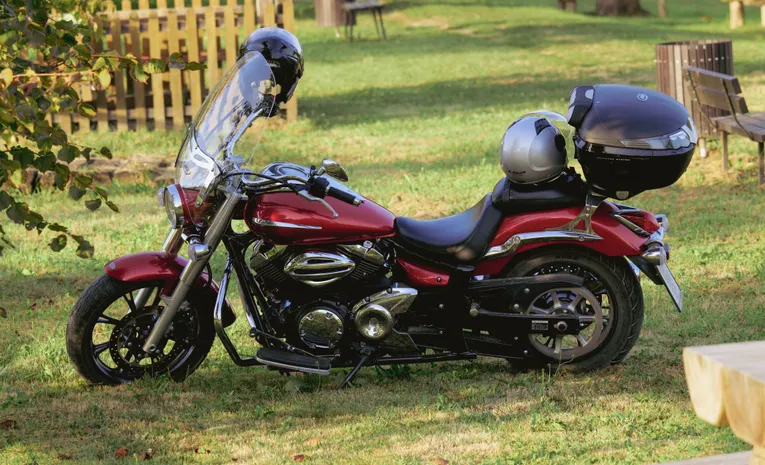
SHARP is the UK government Safety Helmet Assessment and Rating Programme, run by the Department for Transport and established in 2007. It buys helmets from shops, tests seven samples of each model with 32 tests, and rates them from 1 to 5 stars. SHARP tests at 8.5 metres per second, harder than the ECE 22.06 test speed of 8.2 metres per second. A 5-star rating is the best, and SHARP reports about a 70% difference in protection between a 1-star and a 5-star helmet. A 1-star helmet is still legal. SHARP is advisory only, not a legal requirement, and it does not test every helmet sold in Britain.
Helmet types suit different riders. A full-face helmet covers the whole head and face and gives the most protection. A modular helmet flips up at the chin bar and gives full-face protection when closed, with P/J dual homologation for use open and closed. An open-face helmet covers the top and sides of the head but leaves the face exposed, so it gives less protection. Fit matters as much as the rating: a helmet should be snug without pressure points, with no movement when you shake your head. Replace a helmet after five years regardless of use, and always after any crash, even if it looks undamaged.
Jackets
A jacket is your main protection against road rash and impact, and its rating tells you how much it offers. Garments meet the EN 17092 standard in five classes.
| Class | Protection | Best For |
|---|---|---|
| AAA | Maximum protection | Fast road and track riding |
| AA | High protection | Most road riders |
| A | Basic protection | Urban and low speed riding |
| B | Abrasion protection, no impact protectors | Light riding with separate armour |
| C | Holds impact protectors only, no abrasion requirement | Mesh and summer layers |
Armour sits inside the jacket under the EN 1621 standard. Limb protectors to EN 1621-1 cover shoulders, elbows, knees and hips: Level 1 allows a maximum transmitted force of 35 kN, while Level 2 allows a maximum of 20 kN, so Level 2 absorbs more force. Back protectors to EN 1621-2 work the same way: Level 1 allows a maximum of 18 kN and Level 2 a maximum of 9 kN. Fit is vital: a jacket should be snug so the armour stays in place over your shoulders, elbows and back, not loose enough to slide away in a fall. Leather gives strong abrasion protection, while textile gives more weather protection and ventilation. Try it on while sitting on your bike.
Gloves
Gloves matter because your hands hit the ground first in most falls, and bare hands on tarmac heal slowly. Motorcycle gloves meet EN 13594:2015, at Level 1 or Level 2. Knuckle impact protection is mandatory for Level 2 and optional for Level 1, so Level 2 gloves give more protection in a crash. Fit and feel matter as much as the rating: gloves must be snug enough to protect, but you must still feel the controls and work the levers cleanly. Gauntlet gloves reach further up the wrist and stop wind and rain getting in, while short cuff gloves are cooler and easier to put on. See motorcycles by CC and motorcycle types explained.
Boots and Trousers
Motorcycle boots meet EN 13634:2017, at Level 1 or Level 2, covering boot height, abrasion, cut resistance and transverse rigidity. Good boots protect the ankle, which is one of the easiest joints to injure in a fall, and they give grip on wet roads and a solid platform at a standstill. Trainers and sandals are a bad idea: they offer no ankle protection, they slip off easily, and the soles are not built for a motorcycle.
Trousers use the same EN 17092 classes as jackets, with EN 1621 knee and hip armour under the same limb protector standard. A jacket and trousers in matching classes give even protection from head to toe, and many jackets zip to matching trousers to stop them riding up. See A1 vs A2 motorcycle licence and what age you can ride a moped or motorcycle in the UK.
Storage
A top box is a lockable, weatherproof box fitted behind the seat. It is the best choice for commuting and shopping, because you can lock your helmet in it and carry bags without a rucksack. Panniers and saddlebags sit on either side of the rear wheel, keep weight balanced, and suit touring, where you need more space for longer trips. A tank bag sits on the fuel tank and keeps maps and a phone in reach, but watch for paint scratches and make sure it does not block the handlebars. A tail pack straps to the rear seat for a weekend away.
Security matters as much as space. Lock your luggage, take valuables with you, and cover the bike when you leave it. A cover protects against weather when parked outside, keeps the bike cleaner, and makes it less tempting to thieves.
Gear Buying Checklist
- Helmet first. Look for the ECE 22.06 label, plus SHARP stars as a guide. Check for a snug fit with no pressure points.
- Jacket next. An AA jacket with Level 2 armour is the sweet spot for most riders, with protectors at shoulders, elbows and back.
- Gloves and boots certified to their standards. Gloves to EN 13594:2015 and boots to EN 13634:2017, at the best level you can afford.
- Try everything on with the bike. Sit in the riding position, work the controls, and check that armour stays in place.
- Replace the helmet after five years or any crash. Age and impact both cut its protection, even when damage is not visible.
Frequently Asked Questions
Is it illegal to ride a motorcycle without a helmet in the UK?
Yes. A safety helmet is the only item of motorcycle gear legally required in the UK. The main exemption is for Sikh riders wearing turbans, with other narrow exemptions for sidecar passengers, pushing a bike on foot, and riding on private land.
Do I legally need a motorcycle jacket, gloves or boots?
No. The helmet is the only legal requirement. Jackets, gloves, trousers and boots are strongly recommended, and the Highway Code advises strong boots, gloves and suitable clothing, but that advice is not compulsory.
What does a SHARP star rating mean?
A SHARP star rating is a UK government test score from 1 to 5 stars. Five stars is best, and a 1-star helmet is still legal. SHARP tests helmets bought from shops, and reports about a 70% difference in protection between a 1-star and a 5-star helmet.