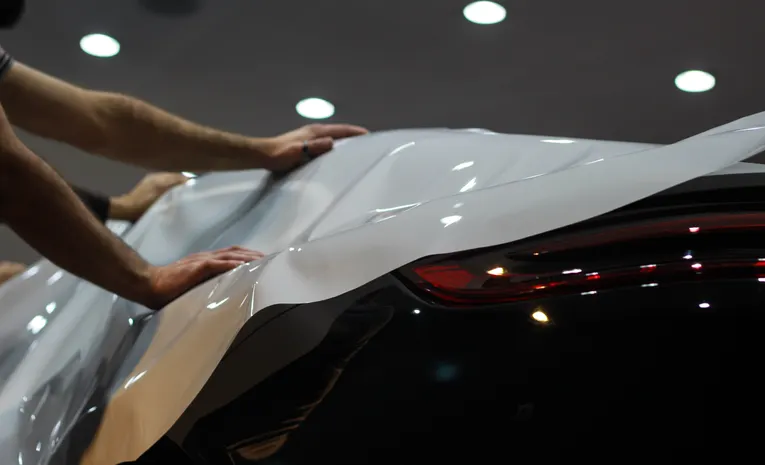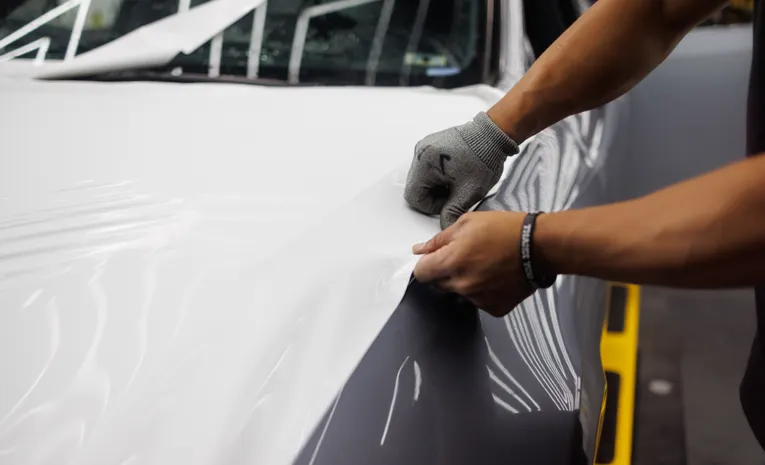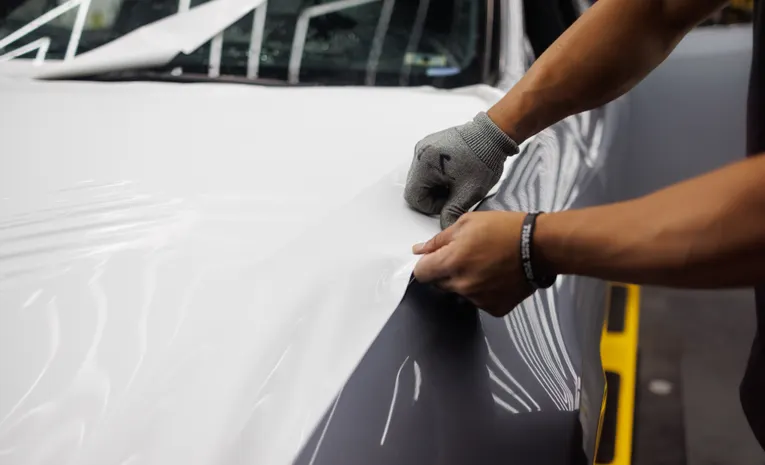

A DIY car wrap kit is worth it for single flat panels such as a bonnet or roof, but not usually for a full car. A full car needs 15 to 20 metres of film on a 1.52 metre roll, plus tools, and takes a novice a full weekend or longer. A professional wrap costs £1,200 to £3,200.
What Comes in a DIY Car Wrap Kit?
A typical DIY kit includes rolls of self adhesive vinyl, a heat gun or hairdryer for stretching the film around curves, a squeegee for smoothing out air bubbles, and a cutting tool for trimming excess material around edges and panel gaps. Full kits add a felt edge squeegee, a precision knife with fresh blades, a spray bottle with water plus a drop of mild soap, isopropyl alcohol and microfibre cloths (rgdaretochange). Kits are sold by panel or as full car sets. The live post’s old price of £150 to £400 for a full car kit was unsourced and has been replaced with the sourced costs below. For ideas on the look, see our guide to wrap colours and finishes.
How Much Vinyl Do You Need?
| Vehicle | Film needed, 1.52 m roll |
|---|---|
| Small city car or hatchback | Around 15 metres |
| Medium hatchback or saloon | Around 16 to 18 metres |
| Large saloon or estate | Around 18 to 20 metres |
| SUV or 4×4 | Around 20 metres or more |
| Small van | Often 20 metres or more |
| Large van | 25 to 30 metres or more |
Source: thesigncompanyuk, Oct 2026. Most bonnets and roofs can be covered with around 2 metres each. Rolls are almost always 1.52 metres, 60 inches, wide, wide enough to cover most panels in a single piece. Always allow extra material for trimming, mistakes and pattern alignment. Beginners should add 10 to 20 percent extra, and beginners often use 10 to 20 percent more material than professionals through trimming errors, misalignment or failed panel attempts (kaleidowrap, thesigncompanyuk).
How Much Does a DIY Wrap Cost?
| Option | Typical cost | Notes |
|---|---|---|
| Film alone, quality cast vinyl at trade rates | About £230 to £300 for a car | RGB UK: about £10 per square metre, 23 to 30 square metres for a car, excluding VAT |
| Tools | About £100 to £200 | Heat gun, squeegees, knife, spray bottle, isopropyl alcohol (tunedrides, US figures) |
| Full DIY wrap, US total | $700 to $1,100 | Premium cast film plus tools (carwrapinfo, US figures) |
| Professional full wrap | £1,200 to £3,200 | iyouprint 2026, 2 to 5 days |
Quality cast wrap film costs around £10 per square metre at trade rates, excluding VAT, with cast overlaminate around £7 per square metre (RGB UK, Nov 2026, trade estimate). A medium panel van needing about 25 square metres costs roughly £250 for the film alone. For a car, 15 to 20 metres of 1.52 metre film is 23 to 30 square metres, so the film alone costs roughly £230 to £300 at trade rates, before tools. 3M 2080 retail is roughly $11 to $15 per linear foot of 60 inch film (Kelley Blue Book, via tunedrides). Material cost for a DIY wrap on a midsize sedan is roughly $650 to $1,000 for 60 to 65 ft of standard cast film, plus $100 to $200 in tools (tunedrides, US figures). The film is roughly a fifth to a third of a professional wrap invoice. You are mostly paying for labour and prep, not vinyl (tunedrides). A general full wrap costs £1,000 to £5,000, average about £3,000 (Checkatrade Oct 2026, via Batch 13). See our guide to how much a professional wrap costs.
Cast or Calendared Vinyl: Which Should a Beginner Buy?
Cast film is made in a liquid state and laid thin, around 2 mil, so it has little built in tension, conforms around bumpers and mirrors, stays where it is put and is rated for roughly 5 to 7 years (tunedrides). Calendared vinyl starts out as a solid and is melted into a sheet. It has a memory of being something else, so it can shrink back, and it is best on flat panels (rgdaretochange, geekzonebooks). Lower grade calendared vinyls are 4 to 6 mil thick, lack protective cap layers and can bake into the paint under UV, leading to cracking and adhesive failure (carwrapinfo). For a beginner, cast vinyl from a known brand, 3M 2080 or Avery Dennison Supreme Wrapping Film, is the safer buy. Cheap calendared film is fine for practising on a flat panel but not for a full car.
How Do You Fit a DIY Wrap, Step by Step?
- Work inside a clean, dust free, shaded garage at 18 to 25 degrees C. Avoid direct sunlight, wind or cold (wraplander).
- Wash and dry the panel, then clean it with isopropyl alcohol so the vinyl bonds properly. Wraplander uses an 80/20 IPA solution, 80 percent water and 20 percent isopropyl alcohol, in a spray bottle.
- Measure and cut with a 5 cm margin on each edge.
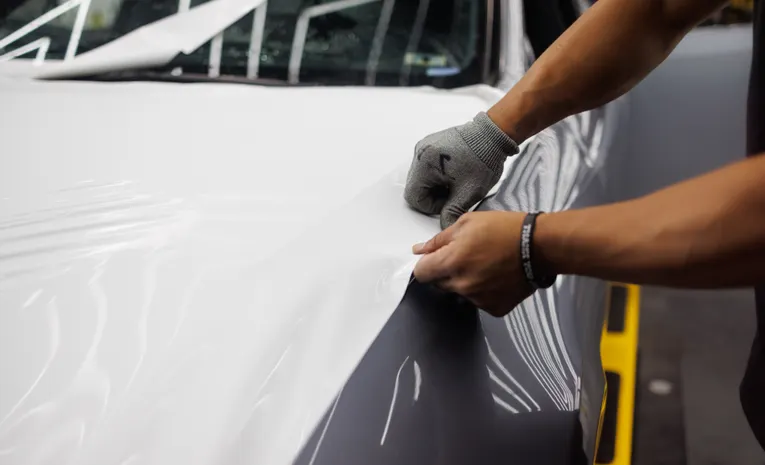
- Float the film on a wet surface with the liner off, then squeegee out water and air bubbles.
- Heat the vinyl to form it around curves. Forming heat is 70 to 80 degrees C, and heat to about 82 to 93 degrees C to kill the memory so it never lifts or shrinks back (rgdaretochange, wraplander).
- Trim the excess and tuck 35 mm, then post heat the edges to 90 degrees C to lock them (rgdaretochange).
- Park the car in direct sunlight for 24 to 48 hours after installation so the sun heat fully cures the adhesive, and do not wash the car for 48 hours (wraplander, rgdaretochange).
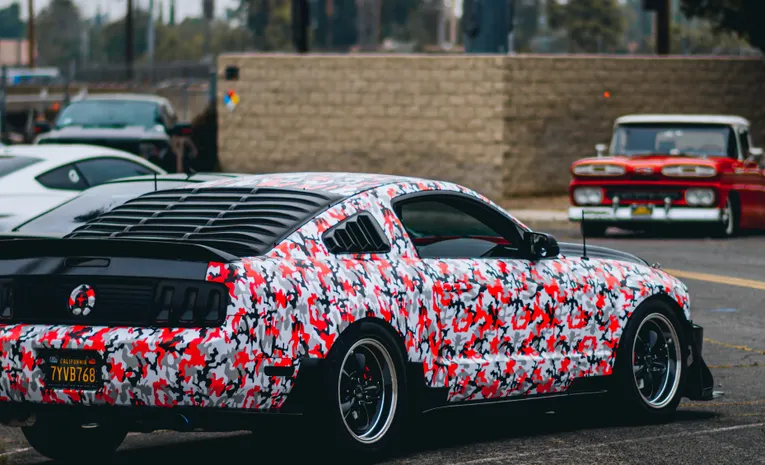
A camo DIY kit is rated difficulty 7 out of 10 with an install time of 6 to 8 hours (wraplander). A full DIY wrap can take a novice a full weekend or longer, compared with 2 to 5 days for a professional installer (Batch 15). The old live post said one to three days for a professional. That was at the low end and has been corrected to 2 to 5 days. See our guide to how long a wrap takes to fit.
Should You DIY or Hire a Professional?
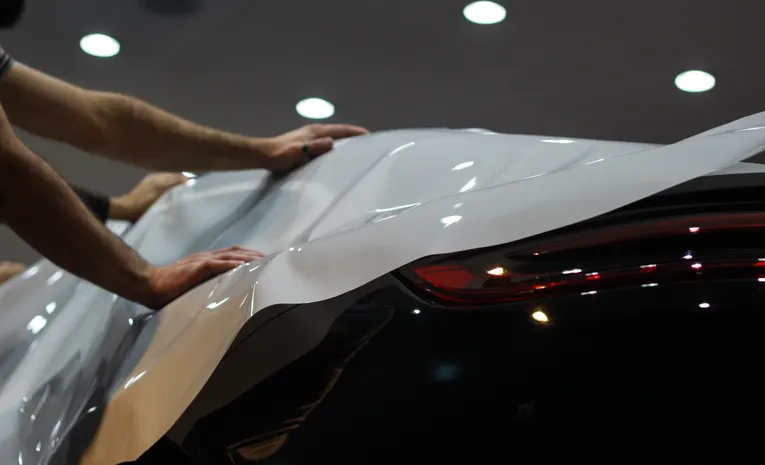
DIY makes the most sense for small, flat panels such as bonnets, roofs or interior trim, where mistakes are cheaper to fix and curves are less complex. A badly done wrap will peel, bubble or look untidy within days, and professionals offer results backed by warranties (teckwrapukofficial). DIY car vinyl wrap kits are available, but they still need proper knowledge and tools. For a full exterior wrap, particularly on a car with tight curves around the bumpers, mirrors and pillars, professional installation is usually worth the extra cost for a smoother, longer lasting finish. A quality cast vinyl wrap lasts 5 to 7 years when professionally installed (tunedrides, Batch 16). A DIY wrap usually lasts less because of less precise edge sealing and stretching, as plain guidance with no figure attached. The old live post said a DIY wrap can last one to three years. No verified DIY specific lifespan figure was found, so that figure has been dropped.
A wrap is a modification, so declare it to your insurer before fitting. Tell the DVLA if the wrap changes the car’s main colour and update the V5C logbook, sending it to DVLA, Swansea, SA99 1BA (Batch 13, Batch 15). Removal costs £200 to £600 (iyouprint, Batch 15) and can lift clear coat that was already failing when the film went on (Batch 16). See our guide to wrap legality, DVLA and insurance rules, and our comparison of wrap vs ceramic coating.
Frequently Asked Questions
How long does a DIY car wrap last?
Quality cast vinyl lasts 5 to 7 years when professionally installed. A DIY wrap usually lasts less because of less precise edge sealing and stretching.
What tools do I need for a DIY car wrap?
Vinyl film, a heat gun, a squeegee, a sharp cutting knife and isopropyl alcohol to clean the surface before application, plus a spray bottle and microfibre cloths.
Can beginners wrap an entire car themselves?
It is possible but challenging. Most beginners find greater success starting with a single flat panel before attempting a full exterior wrap, and a full car is rated difficulty 7 out of 10 (wraplander).
How much vinyl do I need to wrap a car?
Most cars need 15 to 20 metres of film on a 1.52 metre roll, with SUVs and vans needing more, plus 10 to 20 percent extra for a beginner (thesigncompanyuk).
Is a DIY wrap cheaper than a professional wrap?
Yes for the film alone, which costs roughly £230 to £300 at trade rates, but a professional wrap at £1,200 to £3,200 includes labour, prep and a workmanship guarantee, and a badly done DIY wrap can cost more once wasted film is counted.