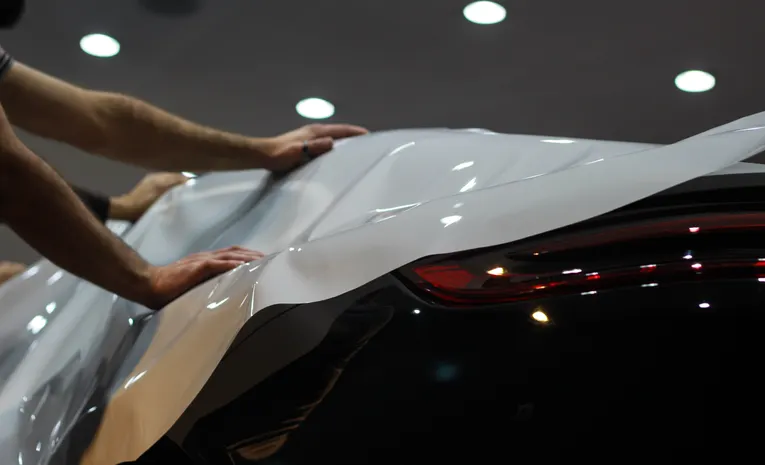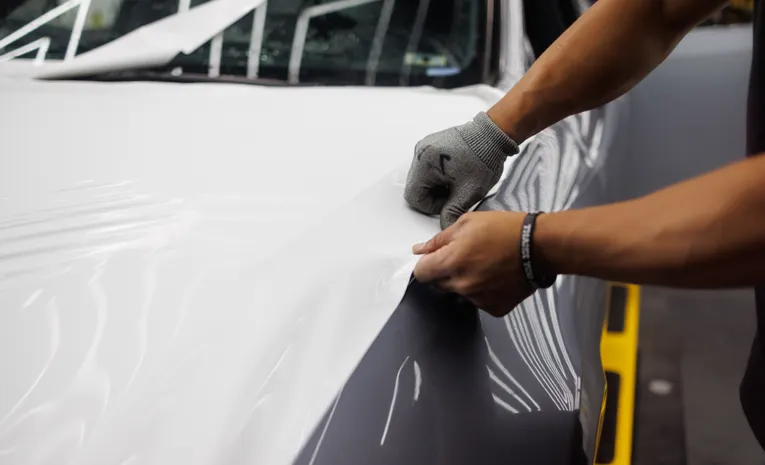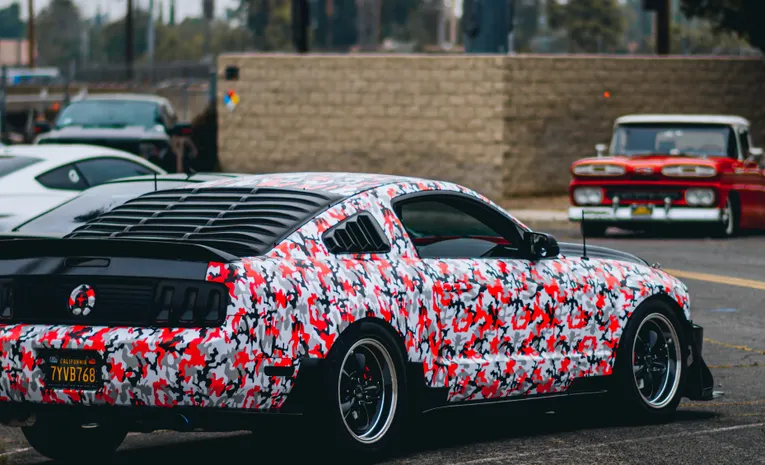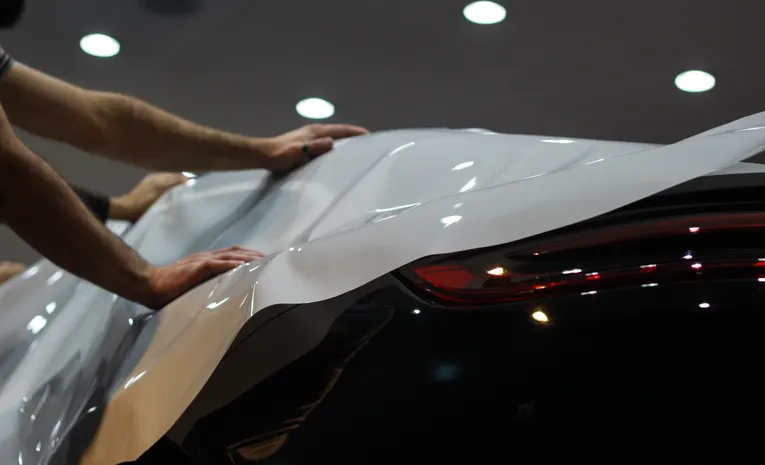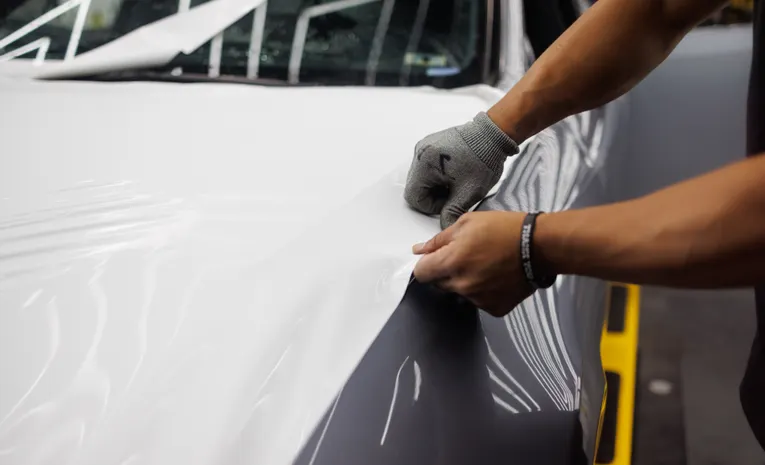

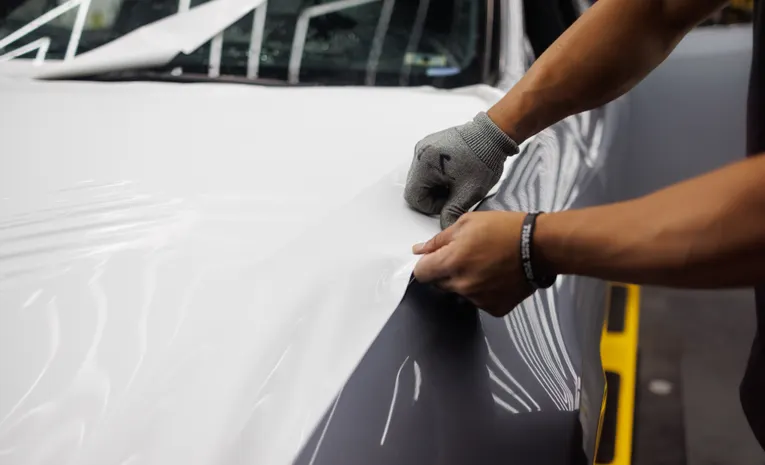
Car wrapping is completely legal in the UK. You must tell the DVLA if the wrap changes the car’s main colour and update the V5C logbook, and you must declare the wrap to your insurer. A wrap must not block lights, plates or windows, and it must not make your car look like a police car.
Wrapping itself is not banned. The law sets rules on DVLA notification, insurance, visibility and design, and those rules are the part most drivers need to get right. For the cost side, see our guide to how much a car wrap costs.
Is Car Wrapping Legal in the UK?
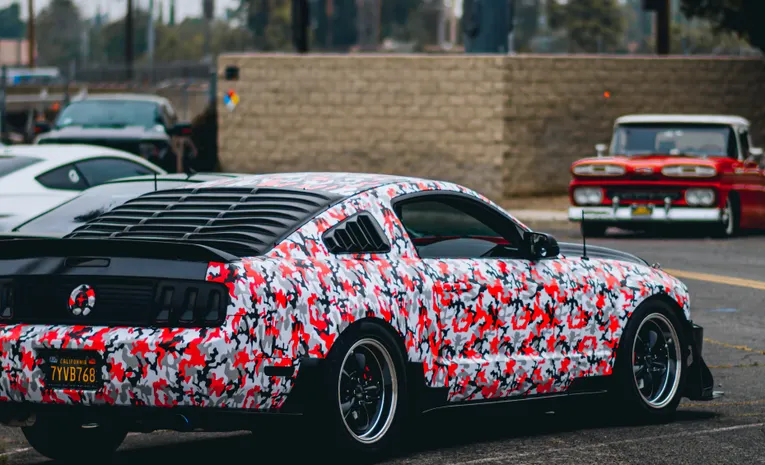
Yes, car wrapping is completely legal in the UK. That is the position in the Antalis guide of November 2023, and it is supported by Adrian Flux, Carmoola and the Popin Graphics guide of August 2025. A wrap is treated as a temporary cosmetic modification, similar to a respray, and it is used legally by private motorists, businesses and motorsport teams. The law does not ban wrapping itself; it sets rules on DVLA notification, insurance, visibility and design.
Do You Need to Tell the DVLA?
Yes, if the wrap changes the main colour of your vehicle. GOV.UK, in its guidance on changing vehicle details on a V5C, says you MUST update your V5C when you change the colour of your vehicle. Fill in section 1 if you have a new style log book, or section 7 if you have the older style log book, and send the V5C to DVLA, Swansea, SA99 1BA for colour changes. The update is free, and you should receive a replacement certificate within 2 to 4 weeks, according to n1visual.
That duty applies to a full colour change. If the wrap is purely advertising graphics or branding that does not change the vehicle’s main colour, DVLA notification is not usually required, according to Antalis, Popin Graphics and Carmoola.
Do not leave the record wrong. If the DVLA record is wrong and the car is stolen, the police may look for the wrong colour car, according to Frsh Customs. No fine figure for failing to tell the DVLA of a colour change was found in any source, so this guide does not state one. The 1,000 pound figure sometimes quoted is for not telling the DVLA of a change of keeper, not for a colour change.
Do You Need to Tell Your Insurer?
Yes. A wrap counts as a modification, so you must declare it to your insurance provider, ideally before it is fitted, according to Adrian Flux, Antalis, Popin Graphics and Frsh Customs. Tell your insurer the colour and finish of the wrap, as Cheap Car Insurance advises, so the policy record matches the car. Failure to declare can breach the terms of your policy and put a future claim at risk or void your cover, according to Adrian Flux and Cheap Car Insurance. A bright or eye catching wrap can also raise your premium because the car may be a more likely target for theft or vandalism, according to Antalis. For the time a wrap takes to fit, see our guide on how long a car wrap takes.
What Designs Are Not Allowed?
A wrap must not mislead other road users into believing your vehicle is a police car, according to Antalis and Adrian Flux. That covers a full police style livery, and also a design close enough to confuse another driver. Reflective vinyl must not imitate emergency or highways vehicles and must not block essential lights, windows or number plates, according to Popin Graphics. Keep red to the rear, amber to the sides and white to the front.
No specific UK ban on chrome or mirror finish wraps was found in any source, so this guide does not invent one. The real rules are the ones above: no imitation of an emergency vehicle, and no blocked lights, plates, reflectors or windows. For chrome prices and lifespan, see our guide to chrome wrap prices and lifespan.
Window film has its own limits, set out in GOV.UK guidance on tinted vehicle windows. For vehicles first used on or after 1 April 1985, the front windscreen must let at least 75 percent of light through and the front side windows at least 70 percent. For vehicles first used before 1 April 1985, both the windscreen and the front side windows must let at least 70 percent through. There are no rules for tinting the rear windscreen or the rear passenger windows.
| Vehicle first used | Front windscreen | Front side windows | Rear windows |
|---|---|---|---|
| On or after 1 April 1985 | At least 75 percent of light through | At least 70 percent | No rules |
| Before 1 April 1985 | At least 70 percent | At least 70 percent | No rules |
Police and DVSA examiners use light measuring equipment, and it is illegal to fit or sell glass that breaks the rules, according to GOV.UK. A film labelled 70 percent over glass that already filters light can fall below the limit, so check the finished window, not the film label. For colours and finishes, see our guide to wrap colours and finishes.
Will a Wrap Affect Your MOT or Finance?
Wraps do not normally affect an MOT, but a wrap must not obscure lights, number plates, reflectors or windows, and wrapping windows so visibility drops can fail an MOT, according to Popin Graphics. The old version of this post said a poorly applied wrap could affect aerodynamics and cause MOT issues. That aerodynamics claim was unsupported and has been dropped.
Finance is separate. Wraps are generally not allowed on cars on finance, because a wrap is a modification not permitted under most standard finance agreements, according to Carmoola. Check your agreement before you book. Advertising on vehicle wraps must also follow ASA, Advertising Standards Authority, rules, according to Popin Graphics. If you are choosing between a wrap and a coating, see our comparison of wrap vs ceramic coating.
Frequently Asked Questions
Is car wrapping legal in the UK?
Yes, with rules on DVLA notification, insurance, visibility and design, according to Antalis. Wrapping itself is legal; the rules govern what you must tell the DVLA and your insurer, and what the wrap must not hide or imitate.
Do I need to tell the DVLA about a partial wrap?
Generally no, if it does not change the vehicle’s main colour. A full colour change must be reported on the V5C, using section 1 or section 7, and sent to DVLA, Swansea, SA99 1BA.
Can a wrap make my insurance more expensive?
Possibly. A bright wrap can raise the premium as a theft target, according to Antalis, and an undeclared wrap can void your cover, according to Adrian Flux.
Is it illegal to wrap a car to look like a police car?
Yes. A wrap must not mislead other road users into believing the vehicle is a police car, according to Antalis and Adrian Flux.
Can I wrap a car that is on finance?
Generally no. Most standard finance agreements do not allow modifications such as wraps, according to Carmoola.
This article is for general information only and is not legal advice.