
An electric car’s official range is its WLTP figure, measured in a lab, and most cars deliver 70 to 90 percent of it in everyday driving. Cold weather and motorway speed cut it further, to around 70 percent of WLTP. The longest-range car on sale is the BMW i3 50 xDrive, at up to 567 miles WLTP.
That gap between the official figure and the miles you actually get is the whole story of electric car range explained for UK drivers. If you are still weighing up a hybrid against a fully electric car, our guide to hybrid vs electric cars sets out how the two choices compare.
What Is WLTP Range?
WLTP stands for Worldwide Harmonised Light Vehicles Test Procedure. It is a lab test on a rolling road under controlled conditions, used across the UK and EU to measure EV range so cars can be compared fairly. It replaced the older NEDC test in 2017 and is closer to real-world conditions, but it is still a test figure, not a promise (Leasevan 2026; Electric Car Scheme, Nov 2026).
Miles per kWh is how far a car goes on one unit of electricity, so a higher figure means the car uses its battery more efficiently.
How Much Range Do You Actually Get?
Most electric cars deliver most of their WLTP figure in everyday driving, but the share falls as speed rises and as the temperature falls.
| Driving condition | Typical real-world range as a share of WLTP | Source |
|---|---|---|
| Good conditions, mild weather, mixed driving | 80 to 90 percent | Leasevan 2026 |
| Sustained motorway speed, 70 mph | 60 to 75 percent | Leasevan 2026 |
| Cold weather below 5 degrees C | Around 70 percent | Leasevan 2026 |
| Freezing temperatures | About 80 percent kept | Recurrent, US data, 18,000 plus vehicles, Jan 2025 |
A second source puts the average at 70 to 85 percent of WLTP (ukcalculator.com 2026). What Car? tested 12 electric cars in March 2024 and found the real-world shortfall reached up to 38 percent (Electric Car Scheme, Nov 2026).
What Car? then ran a 581 mile road trip in November 2026, from London to Land’s End and back, mostly on motorways, in 8 to 12 degrees C. The BMW i3 50 xDrive was extrapolated to 369 miles, 31 percent short of the 534 mile official figure for the car as tested, an M Sport First Edition on 20 inch wheels, while the base 50 xDrive is rated at 567 miles WLTP. The Mercedes C 400 4MATIC Electric was extrapolated to 331 miles, 23 percent short of the 428 mile official figure for the car as tested, a Premier Edition, while the base C 400 is rated at 452 miles WLTP. Efficiency including charging losses was 3.16 miles per kWh for the BMW and 3.13 for the Mercedes.
What Kills Electric Car Range?
Speed is the biggest factor. Drag rises rapidly above 60 mph, so motorway range falls further than city range, where regenerative braking helps by recovering energy as the car slows (Leasevan 2026; Electric Car Scheme, Nov 2026; Select Car Leasing 2026).
Cold weather is next. It affects battery chemistry and adds the energy used for cabin heating. Recurrent analysed more than 18,000 US vehicles in January 2025 and found the average EV kept about 80 percent of its range in freezing temperatures. Heat pump models kept 72 to 89 percent, while models without a heat pump kept 63 to 83 percent. This is US data, so treat it as a guide rather than a UK promise (Electric Car Scheme, Nov 2026).
The other factors are smaller on their own but add up: cabin heating and air conditioning, heavy loads and roof boxes, under-inflated tyres, and aggressive driving.
Which Electric Cars Have the Longest Range?
The longest-range EVs on sale in the UK, on official WLTP figures, are listed below. If boot space matters too, see the electric cars with the biggest boot space before you decide.
| Model | Official WLTP range | What Car? real-world estimate where known | Source |
|---|---|---|---|
| BMW i3 50 xDrive, new electric 3 Series saloon, launched Nov 2026 | Up to 567 miles | 369 miles on the Nov 2026 road trip, 31 percent short of the 534 mile as-tested figure | BMW, 912 km; Auto Express Nov 2026 lists 566 miles |
| Mercedes EQS 450+ | 542 miles | Not tested | Electric Car Scheme, Nov 2026 |
| BMW iX3 50 xDrive, new 2025 model SUV | Up to 500 miles, 421 to 500 depending on wheels and trim | 393 miles | BMW via What Car? and evo; What Car? Car of the Year 2026 |
| Tesla Model 3 Long Range | Over 466 miles | Not tested | Synergy, Mar 2026 |
| Skoda Enyaq | Up to 359 miles | Not tested | Synergy, Mar 2026 |
The BMW i3 50 xDrive is the new electric 3 Series saloon and the longest-range car on sale. The Mercedes EQS 450+ is next at 542 miles WLTP; note the earlier EQS figure of 511 miles is outdated. The BMW iX3 50 xDrive is a different car, a 2025 model SUV, and the old iX3 was about 285 miles, so do not mix the i3 saloon up with the iX3 SUV. The Tesla Model 3 Long Range is over 466 miles WLTP, and the Skoda Enyaq is up to 359 miles. The average new EV is 250 to 350 miles WLTP (Electric Car Scheme, Nov 2026).
A Fleet News test, which drove each car until it showed zero miles, gives a useful second check. The BYD Dolphin managed 243 miles actual against 265 WLTP, at 4.0 miles per kWh, the best in the test. The Polestar 2 Long Range single motor managed 279 miles against 379 WLTP, the Ford Mustang Mach-E Extended Range 288 miles against 373 WLTP, at 3.1 miles per kWh, and the VW ID.3 Pro S 293 miles against 347 WLTP. This is an older test, and its EQS row used the 438 mile WLTP version, so it is not used here for the EQS.
How Much Range Do You Actually Need?
Less than most buyers fear. The average car in England covered 7,100 miles in 2024, about 20 miles a day, according to the Department for Transport National Travel Survey. The average person in England travelled about 17 miles a day in 2024 across all modes of transport, and electric cars averaged 8,900 miles a year (DfT National Travel Survey 2024).
Work out your own weekly miles and add a margin for winter and motorway use. Used EV prices are covered in our used car market trends for 2026. If you are buying used, check our guide to the most reliable used cars in the UK, and think about whether gap insurance is worth it in the UK.
Range anxiety also looks smaller in context. The UK had 124,738 public charge points across 48,298 locations at the end of September 2026 (Zapmap). Running out of charge caused less than 2 percent of AA EV breakdowns in 2024, down from 8.26 percent in 2015 (AA).
Does Charging Affect Range?
A bigger battery usually means more miles, but it also means a heavier and dearer car, so more range is not always the right choice. Rapid charging does not change the range of a full battery. It changes how fast you can add miles back.
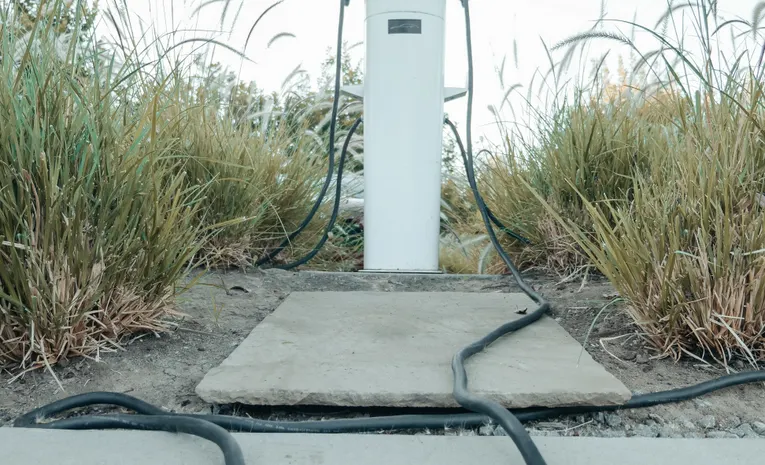
The new BMW iX3 shows what ultra-rapid charging can do. It has a 400 kW maximum charging rate and adds up to 231 miles in 10 minutes on an ultra-rapid 800 volt charger (BMW via Stuff, May 2026).
Most manufacturers guarantee at least 70 to 80 percent of original battery capacity at 8 years or 100,000 miles (Leasevan 2026). Geotab research from January 2026 found average battery degradation of around 2.3 percent per year.
Frequently Asked Questions
What is WLTP range?
It is the official lab-test figure used to compare cars. Real-world range is usually 70 to 90 percent of it.
How much range do electric cars lose in winter?
Typically 10 to 30 percent below 5 degrees C. Recurrent’s US study found EVs kept about 80 percent of range in freezing temperatures.
Does motorway driving reduce EV range?
Yes. Sustained 70 mph typically gives 60 to 75 percent of WLTP, because drag rises fast above 60 mph.
Which electric car has the longest range in the UK?
The new BMW i3 50 xDrive, up to 567 miles WLTP. The Mercedes EQS 450+ is next at 542 miles, then the BMW iX3 SUV at up to 500 miles.
How many miles a day does the average UK driver cover?
About 20 miles a day per car, based on 7,100 miles a year in 2024 (DfT National Travel Survey), so most EVs cover several days of driving on one charge.