
How to pass the Mod 1 motorcycle test
Module 1 is the off-road part of the UK motorcycle test, and most riders fail it on avoidable faults: a foot down in the U-turn, a clipped cone in the slalom, or too little speed in the emergency stop. This guide covers all seven exercises one by one, the fault that fails each one, and the technique that avoids it.
Module 1, or Mod 1, is the first of the two practical parts of the UK motorcycle test. It takes place off the road in a motorcycle manoeuvring area, normally takes about 20 minutes, and tests slow speed control and higher speed handling. You must pass it before you can take Module 2, the on-road test. There is no minimum number of lessons before you book, but most riders take Mod 1 after several training sessions with a school, and the pass mark is strict on the speed exercises. The good news is that every exercise is the same every time, so you can practise each one until it feels routine.
What is the Mod 1 motorcycle test?
Mod 1 tests whether you can control a motorcycle at slow speed and at higher speed, in a marked out area away from traffic. GOV.UK lists seven exercises: wheeling the bike and using the stand, slalom and figure of eight, slow ride, U-turn, cornering and controlled stop, cornering and emergency stop, and cornering and hazard avoidance. The examiner watches from the side of the area and marks faults as you go.
The pass mark is simple to state and hard to meet under pressure: no serious or dangerous faults, and no more than five riding faults, which are minor faults. One serious fault fails the test on the spot, even if everything else was perfect. Most serious faults on Mod 1 come from the same few causes: hitting a cone, putting a foot down where the exercise forbids it, failing to reach the minimum speed, or missing an observation before moving off. That is why the fault checklist below matters more than any general advice. Learn the fault for each exercise, then practise the one technique that avoids it.
You must pass both Mod 1 and Mod 2 within two years of passing your theory test, or the theory pass expires and you start again. If you are taking the progressive access route, you must pass Mod 2 within six months of passing Mod 1, or you have to pass Mod 1 again. Our guide to how to get a full motorcycle licence in the UK explains the licence categories, the age rules and the full route from CBT to a full licence.
What are the seven Mod 1 exercises?
The exercises always run in the same order, and each one tests a different skill. The table below gives the fault that fails each exercise and the one technique that avoids it. Practise them in this order at your training school, because that is the order you will face on the day.
| Exercise | What it involves | Fault that fails it | Technique that avoids it |
|---|---|---|---|
| Wheeling the bike and using the stand | Push the bike forward and back, then put it on its stand | Dropping the bike or losing control while wheeling | Keep both hands on the bars, look ahead not down, and use the front brake gently to stop the bike rolling |
| Slalom and figure of eight | Ride a slalom through cones, then a figure of eight around two cones | Hitting a cone, or putting a foot down | Look where you want to go, not at the cone in front of you, and keep a steady throttle with the clutch at biting point |
| Slow ride | Ride slowly in a straight line without putting a foot down | Putting a foot down, or stalling | Keep the revs up and control speed with the clutch and rear brake, not the throttle |
| U-turn | Turn the bike around inside a marked box | Putting a foot down, or going outside the lines | Turn your head and look right round to where you want to finish, and keep the clutch slipping so the bike stays upright |
| Cornering and controlled stop | Ride round a bend and stop smoothly at a marked point | Stopping well past the mark, or a jerky stop | Brake progressively, squeeze rather than grab, and look ahead through the bend before you brake |
| Cornering and emergency stop | Ride round a bend, then stop as quickly and safely as you can when signalled | Too little speed, or locking a wheel and skidding | Build speed early on the straight, then brake hard with both brakes together and keep the bike upright |
| Cornering and hazard avoidance | Ride round a bend, then swerve around an obstacle at speed | Too little speed, hitting the obstacle, or swerving too late | Look at the gap, not the obstacle, and push the bars to steer, which is counter steering, rather than leaning |
Two habits run through every exercise. First, look where you want to go. Riders who stare at a cone ride straight into it, and riders who stare at the ground in a U-turn put a foot down. Second, do a lifesaver check, a shoulder check over your shoulder, before every move off. Missing observations is one of the most common fail reasons, and it costs nothing to get right.
How fast do you need to go in the Mod 1 speed exercises?
Speed is where most Mod 1 fails happen, because the minimum is higher than most learners expect. The emergency stop and the hazard avoidance both have a minimum speed of 50 km/h, which GOV.UK states as 31 mph on a motorcycle, though training schools commonly round it to 32 mph. On a moped the minimum is 19 mph. A speed measuring device records your speed, so guessing is not an option.
| Exercise | Minimum speed | Below the minimum | At 48 or 49 km/h |
|---|---|---|---|
| Emergency stop | 50 km/h (31 mph) | Serious fault, fail | Rider fault, still a pass if it is your only serious issue |
| Hazard avoidance | 50 km/h (31 mph) | Serious fault, fail | Rider fault, still a pass if it is your only serious issue |
| Controlled stop | No minimum speed | No speed fault, but a poor stop can still be marked | Examiner aims for about 30 to 50 km/h through the speed device |
The 48 to 49 km/h nuance catches riders out. If you reach 48 or 49 km/h on a speed exercise, you get a rider fault, a minor, and you can still pass. Below 48 km/h it is a serious fault and you fail. That is why instructors tell learners to aim well above the minimum, not at it. If you aim for 50 km/h exactly and your speed dips by a fraction, you fail. Aim for a comfortable margin, build your speed early on the straight before the bend, and keep the throttle open until you reach the braking point. On the controlled stop there is no minimum speed, but the examiner still expects a smooth, controlled stop at a sensible speed, so do not crawl through it.
What are the most common Mod 1 fail reasons?
Training schools report the same short list of fail reasons again and again, and all of them are avoidable with practice. The most common is hitting a cone in the slalom or figure of eight, usually because the rider looked at the cone instead of through the gap. Next is putting a foot down during the U-turn or the slow ride, which happens when the rider goes too slowly and the bike starts to tip. Failing to reach the minimum speed on the emergency stop or hazard avoidance is the third common fail, and it usually comes from braking too early or not opening the throttle enough on the approach.
Missing observations is the fail that surprises riders most. The examiner expects a lifesaver check before every move off, including at the start of each exercise. Riders who are focused on the exercise itself forget the check, and a missed observation at the wrong moment is a serious fault. Build the check into your routine: every time you are about to move, check over your shoulder first, then go.
The last common fail is stalling, usually in the slow ride or at the start of the U-turn. Stalling once is normally a rider fault, not a fail, but stalling repeatedly or stalling and then panicking can become a serious fault. Keep the revs up, use the clutch to control speed, and if you do stall, take a breath, restart calmly and carry on. One stall does not end your test.
How many faults can you make and still pass Mod 1?
You can make up to five riding faults, which are minor faults, and still pass, as long as you make no serious or dangerous faults. A riding fault is a small mistake, such as a slightly late observation or a minor wobble. A serious fault is a mistake that could have been dangerous, such as failing to reach the minimum speed, hitting a cone, or putting a foot down in an exercise where that is not allowed. A dangerous fault is one that actually put someone at risk. One serious or dangerous fault fails the test, even if the rest of your ride was faultless.
This matters for how you ride on the day. Do not try to be perfect. Try to be safe and smooth. If you make a small mistake, forget it at once and focus on the next exercise. Riders who dwell on a fault they think they made often make a bigger one straight after. The examiner marks each exercise separately, so a wobble in the slalom does not affect your emergency stop.
What should you bring on Mod 1 test day?
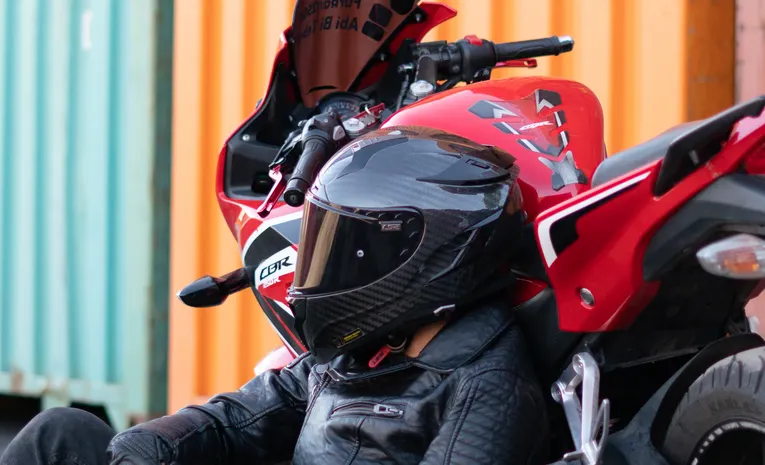
A test can be cancelled before it starts if you turn up without the right documents or clothing, and a cancelled test means no refund. The checklist below covers everything the examiner will ask for. Pack it the night before so nothing is left to chance.
| Item | What the examiner expects |
|---|---|
| UK photocard driving licence | The original, not a photocopy |
| Theory test pass certificate | The original, not a photocopy |
| CBT certificate (DL196) | The original, unless you are upgrading a full licence |
| Helmet | Must meet British safety standards |
| Boots | Motorcycle boots, or sturdy footwear that supports and protects your ankles |
| Trousers | Textile or leather motorcycle trousers, or heavy denim trousers |
| Jacket | Textile or leather motorcycle jacket, or a heavy denim jacket with several layers underneath |
| Gloves | Motorcycle gloves |
Your test bike must be a solo machine, display L plates front and rear, have a speedometer in miles per hour, and be insured, taxed and roadworthy, with no engine warning lights showing. Both modules must use the same subcategory and the same transmission type as the licence you applied for. The minimum bike sizes are: A1, 120 to 125cc and up to 11 kW; A2, at least 245cc and 20 to 35 kW; A, at least 595cc, at least 50 kW and at least 175 kg. If you are using a school bike, the school checks all of this for you. If you are using your own bike, check the L plates, the tax and the warning lights the day before.
If you passed your CBT recently, our guide to how much a CBT test costs in the UK explains the prices by region and course type. If you are still choosing your first bike, our guide to the best 125cc motorbikes for beginners in the UK compares the best options by rider type, and our best A2 motorcycles UK guide lists the best bikes once you turn 19. Our A1 vs A2 motorcycle licence guide explains which category fits your age and plans.
What happens if you fail Mod 1?
If you fail Mod 1, you must book another test and pay again. You can choose a date at least three working days away, and Sundays and public holidays do not count as working days. The Mod 1 fee is £15.50, the same on weekdays and on evenings, weekends and bank holidays, and a rebook costs the same £15.50 for the test slot itself, plus bike hire and instructor time if you book through a school.
A fail has one knock on effect that catches riders out. If you already booked Mod 2 for the same day, you cannot sit it, because you must pass Mod 1 before you can take Mod 2. You also lose the Mod 2 fee if you do not give three full days notice to cancel it, which is £75 on a weekday or £88.50 on evenings, weekends and bank holidays. Book Mod 2 for a later date than Mod 1 if you can, so a Mod 1 fail does not cost you both fees.
Ask your instructor what went wrong before you rebook. The examiner gives a debrief, and your instructor can turn it into a short practice plan, often one or two sessions focused on the single exercise that failed you. Most riders who fail Mod 1 pass on the second attempt, because the test is identical every time and the fix is usually one technique, not a whole new skill. If you are still deciding which bike suits your licence, our motorcycle types explained guide and our motorcycles by CC guide can help you choose before you spend anything.
How much does Mod 1 cost and how do you book it?
The DVSA test fees are fixed by the government and are the same everywhere: the theory test costs £23, Mod 1 costs £15.50, and Mod 2 costs £75 on weekdays or £88.50 on evenings, weekends and bank holidays. Together, the three test fees come to £113.50 on a weekday. You also need a provisional licence first, which costs £34 online or £43 by post.
You book Mod 1 through GOV.UK, and you can book it through your training school, which usually handles the booking and supplies the bike. There is no minimum number of lessons before booking, so you can book as soon as your instructor says you are ready. Book the test at a centre you have practised at if you can, because the manoeuvring area layout is the same at every centre, but knowing the surface and the surroundings helps on the day. Arrive early, walk the area in your head, and run through the exercise order once more before your name is called.
Frequently asked questions
How long does the Mod 1 test take?
Mod 1 normally takes about 20 minutes. It is an off-road test in a motorcycle manoeuvring area, and it covers seven exercises: wheeling the bike, slalom and figure of eight, slow ride, U-turn, controlled stop, emergency stop and hazard avoidance.
How fast do you need to go in Mod 1?
You need to reach at least 50 km/h, which is 31 mph, on the emergency stop and the hazard avoidance. At 48 or 49 km/h you get a rider fault and can still pass, but below 48 km/h it is a serious fault and you fail. The controlled stop has no minimum speed.
Can you fail Mod 1 for putting your foot down?
Yes. Putting a foot down during the U-turn or the slow ride is a serious fault and fails the test. Keep your feet on the pegs, look where you want to go, and control speed with the clutch and rear brake.
How many faults can you get in Mod 1?
You can make up to five riding faults, which are minor faults, and still pass. One serious or dangerous fault fails the test, even if the rest of your ride was faultless.
What happens if you fail Mod 1?
You must book another test at least three working days later and pay the £15.50 fee again, plus bike hire and instructor time if you book through a school. If you had Mod 2 booked for the same day, you cannot sit it and you lose the Mod 2 fee unless you gave three full days notice to cancel.
What do I need to bring to my Mod 1 test?
Bring your UK photocard driving licence, your theory test pass certificate and your CBT certificate, all originals. Wear a helmet, motorcycle boots, motorcycle trousers, a motorcycle jacket and gloves. Your bike must display L plates, have a speedometer in miles per hour, and be insured, taxed and roadworthy.