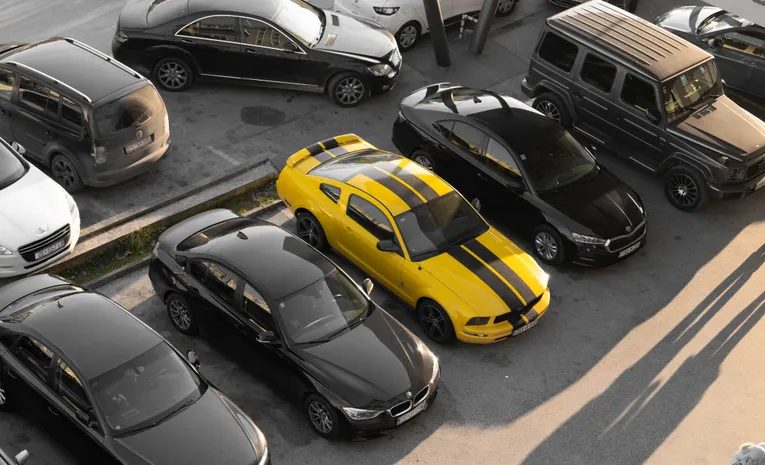

Walk through any large UK car park and you will see the same puzzle repeated row after row: small hatchbacks next to tall SUVs, long estates next to low coupes, and family cars that look similar at first glance but work very differently in daily life.
With more than 380 car models on sale in the UK, according to the SMMT, choosing by badge alone is a poor way to start. A body type is the shape of the car: its doors, roofline, height, and whether the boot is separate or part of the cabin. This guide explains each type in plain terms, with real boot space figures for current models.
Hatchback
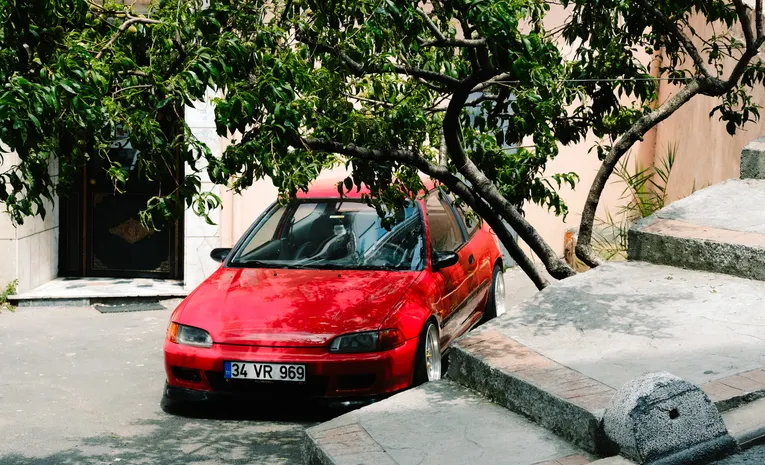
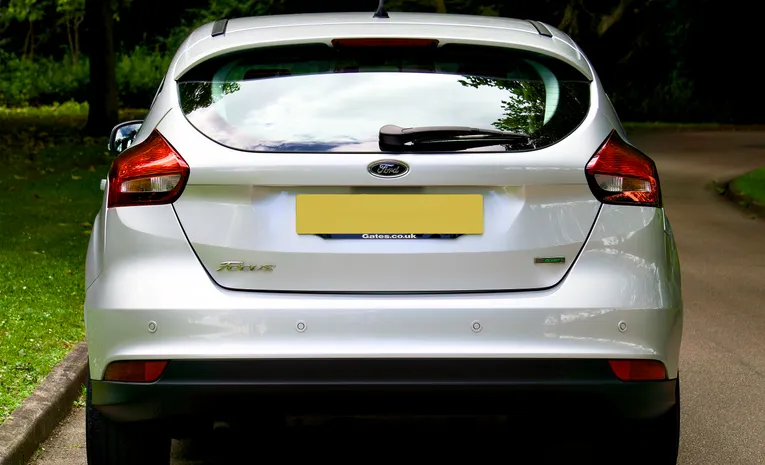
The hatchback is the default car for UK driving. The rear door lifts up with the rear window, so the boot opens into the cabin and is easy to load. Fold the seats and it carries far more than it looks.
Hatchbacks suit city driving and first cars. They are compact, easy to park, and cheap to run, although rear space can be tight in the smallest models. The current Volkswagen Golf offers 381 litres of boot space with the seats up, rising to 1,237 litres with them down, while the Ford Focus offers 375 litres, rising to 1,354 litres. See our guide to cars with big boots in the UK.
Saloon
A saloon is the classic three-box car: engine at the front, passengers in the middle, and a separate enclosed boot at the back. The boot lid opens on its own, so luggage is sealed off from the cabin, which keeps road noise down and bags out of sight.
Saloons suit drivers who value quiet comfort and a smart look, and who rarely carry tall or bulky items. The trade-off is a narrower boot opening and less flexibility than a hatchback. The Skoda Octavia liftback offers 600 litres with the seats up and 1,555 litres with them down.
Estate
An estate stretches the saloon shape with a longer roofline, giving a large, square load area behind the rear seats. It is the load-lugging choice that still drives like a car.
Estates suit families, dog owners, and anyone who carries prams, sports kit, or work equipment. The figures are hard to beat: the Skoda Octavia Combi offers 640 litres with the seats up and 1,700 litres down, the Volkswagen Golf Estate offers 611 litres and 1,642 litres down, the Ford Focus Estate offers 575 litres, and the Skoda Superb Estate offers 690 litres and 1,920 litres down. See our pick of the best estate cars under £20,000.
SUV
An SUV sits higher than a hatchback or saloon, with a taller driving position, more ground clearance, and an upright shape. Many offer four-wheel drive, although most UK buyers choose front-wheel-drive versions, which cost less to buy and run.
SUVs suit drivers who want an easy step in, a clear view over traffic, and space for a family. The trade-offs are higher fuel use, higher prices, and harder parking in tight spaces. In 2024, eight of the ten best-selling new cars in the UK were SUVs or crossovers, according to SMMT figures; only the Volkswagen Golf and Volkswagen Polo were not.
Small SUVs are the practical heart of the range. The Nissan Juke offers 422 litres, or 354 litres as a hybrid, the Ford Puma offers 456 litres plus an 80 litre Megabox, the Renault Captur offers 422 to 536 litres, or 326 litres as a hybrid, the Volkswagen T-Cross offers 385 litres, and the Vauxhall Mokka offers 350 litres. See cars similar to the Nissan Juke and our round-up of small SUVs with big boot space.
Coupe
A coupe is a two-door car with a low, sloping roofline and a sporty shape. It suits drivers who put style and driving feel first. The trade-offs are practical: rear headroom is limited, getting into the back takes effort, and boot space is usually modest. A coupe works best as a second car, or as a main car for a driver who rarely carries rear passengers.
Convertible
A convertible, also called a cabriolet, has a roof that folds away, either as a fabric soft top or a folding metal hard top. With the roof down, it offers open-air driving that no other body type can match, and it suits fair-weather fun. The trade-offs are space, cost, and comfort in poor weather: rear seats are often cramped, boot space is small, and a soft top lets in more wind noise than a fixed roof.
MPV
An MPV, or multi-purpose vehicle, is a tall, boxy family car designed around people carrying. It usually has three rows of seats and a cabin that can be rearranged to carry passengers, luggage, or a mix of both.
MPVs suit large families who need seven seats and still want room for bags. Child seats fit easily, and the boxy shape helps with getting children in and out. The trade-off is that the market has shrunk as SUVs took over family buyers, so fewer new MPVs are on sale. Even so, for pure family practicality, a good MPV still beats many SUVs, as our comparison of MPV versus SUV boot space explains.
Pickup
A pickup has a separate open load bed behind the cab, instead of an enclosed boot. The bed is built for tools, equipment, and bulky loads that would not fit inside a car. Pickups suit tradespeople, farmers, and rural drivers who drive on rough tracks or unmade roads. The trade-offs are running costs and everyday comfort: pickups are large, heavy, and thirsty, they can be awkward to park, and the open bed leaves loads exposed unless a cover is fitted.
Which Body Type Should You Choose?
Start with how you use a car, not with how it looks in a showroom. For city parking and short trips, a hatchback is the simplest choice. It fits tight spaces, turns easily, and keeps costs down.
For family life and boot space, an estate is the smartest pick for the money, with a low load lip and a huge square boot. A larger SUV or an MPV makes sense if you need seven seats or regularly carry a full car of people and luggage. See the most reliable used cars in the UK if buying second hand.
For towing and rough roads, an SUV with four-wheel drive or a pickup is the right tool. For style, a coupe or a convertible wins, as long as you accept smaller rear seats and boot. For budget buyers, a hatchback gives the most car for the least money.
Car Body Types at a Glance
| Body Type | Best For | Trade-Off | Typical Boot Space (seats up) |
|---|---|---|---|
| Hatchback | City driving, first cars | Small boot | 381 litres (Golf), 375 litres (Focus) |
| Saloon | Quiet comfort | Narrow boot opening | 600 litres (Octavia liftback) |
| Estate | Families, heavy loads | Long to park | 640 litres (Octavia Combi), 690 litres (Superb Estate) |
| SUV | High seat, family space | Higher costs, fuel use | 422 litres (Juke), 456 litres (Puma) |
| Coupe | Style, driving fun | Cramped rear seats | Varies by model |
| Convertible | Open-air driving | Small boot | Varies by model |
| MPV | Seven seats | Fewer new models | Varies by model |
| Pickup | Work loads, towing | High running costs | Open load bed |
Frequently Asked Questions
What is the most popular body type in the UK?
SUVs and crossovers are the most popular body type in the UK. In 2024, eight of the ten best-selling new cars were SUVs or crossovers, according to SMMT figures, and only the Volkswagen Golf and Volkswagen Polo were not.
What is the difference between an SUV and a crossover?
A crossover is a car-based SUV, usually smaller and built on a hatchback platform, without serious off-road ability. A full SUV is often larger, tougher, and more likely to offer proper four-wheel drive and higher towing ability.
Which body type has the biggest boot?
Estates lead on usable space for the money. The Skoda Octavia Combi offers 640 litres with the seats up, and the Skoda Superb Estate offers 690 litres. Large SUVs may match it, but cost more.