
To drive an automatic car, press the brake with your right foot, start the engine, select D and ease off the brake to creep forward. Your left foot stays flat on the floor and never touches a pedal. Use D for normal driving and P only when parked. Passing your test in an automatic restricts your licence to automatics only.
What Do the Letters on the Gear Selector Mean?
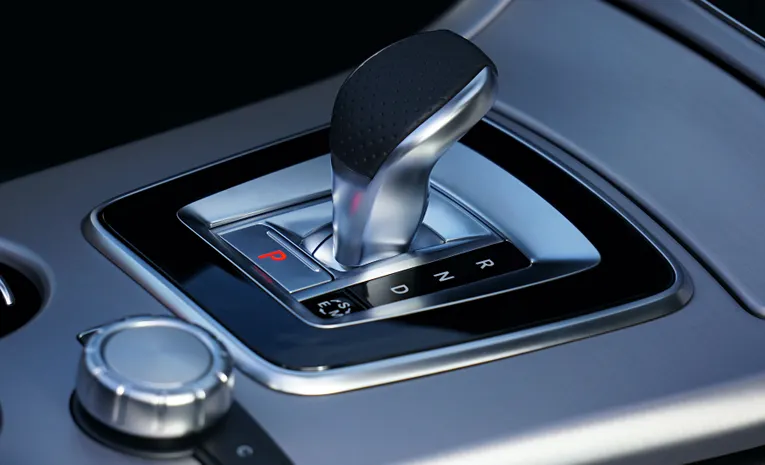
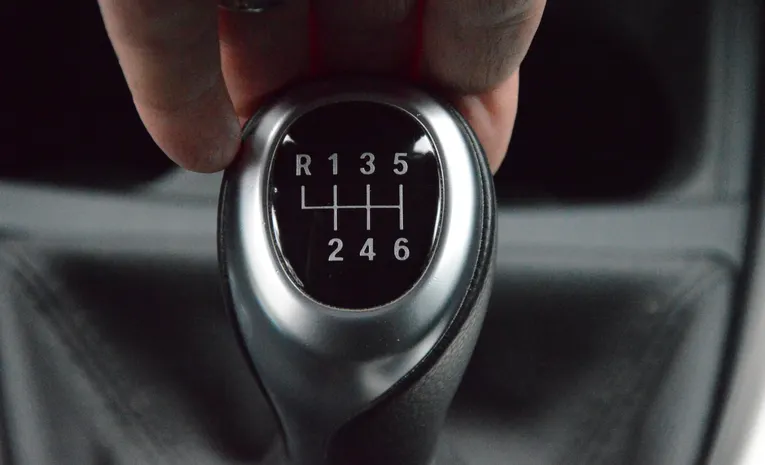
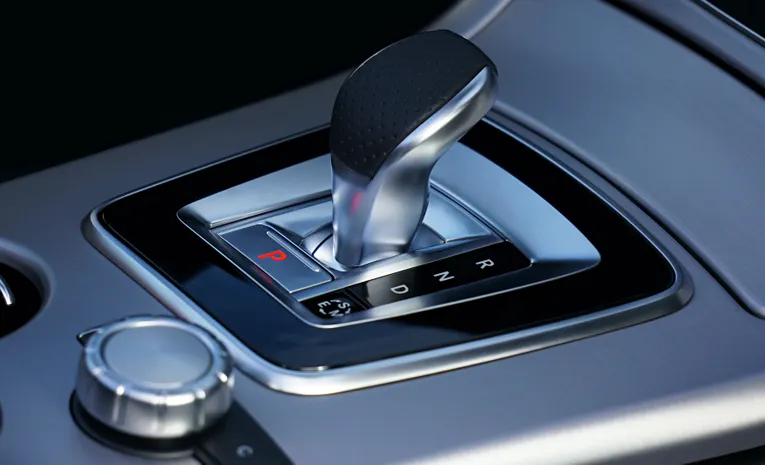
Most automatic cars use a simple set of positions: P for Park, R for Reverse, N for Neutral and D for Drive, with some cars also offering S or Sport mode, L for Low and M for Manual mode or paddle shifters. Unlike a manual car, there is no clutch pedal, so your left foot stays completely still while driving (firstvehicleleasing, moneyexpert, gocarandvanrental, RAC).
| Position | What it does | When to use it |
|---|---|---|
| P, Park | Locks the transmission | Only when the car has fully stopped and you are leaving it |
| R, Reverse | Drives the car backwards | Only when fully stopped |
| N, Neutral | Disconnects the engine from the wheels | Long waits, towing, or being pushed |
| D, Drive | The car chooses the gears for you | Almost all normal driving |
| S, Sport | Holds lower gears longer for sharper response | Overtaking or hilly roads |
| L, Low | Holds a low gear for engine braking | Steep descents |
| M, Manual or paddles | Temporary manual control of gear changes | Downhill engine braking or towing |
The car will only start in P or N, and most automatics will not start unless the brake pedal is pressed, because of the brake-shift interlock (RAC, firstvehicleleasing). That interlock is also why you cannot move the selector out of Park without your foot on the brake. Kickdown drops the gearbox to a lower gear for maximum acceleration when you press the accelerator firmly to the floor, which is useful for overtaking.
How Do You Drive an Automatic Car Step by Step?
Driving an automatic is a short routine you repeat every time, and it becomes second nature within a few journeys.
- Set your seat and mirrors.
- Press the brake with your right foot and start the car.
- Keep holding the brake while you select D to go forwards or R to reverse.
- Release the parking brake.
- Ease off the brake so the car creeps forward on its own, using creep torque.
- Gently press the accelerator to gain speed.
- To slow or stop, ease off the accelerator and press the brake with your right foot.
Your left foot stays flat on the floor throughout (firstvehicleleasing, RAC, moneyexpert). Auto hold, now common on modern cars, holds the brake for you after you lift off the pedal, but the car stays in Drive internally (autopostglobal).
What Are the Different Types of Automatic Gearbox?
There are six main types of automatic gearbox in 2026: traditional torque converters, continuously variable transmissions (CVT), dual-clutch gearboxes (DCT), automated manuals (AMT), hybrid systems and the single-speed drive in electric cars (firstvehicleleasing).
A torque converter uses a fluid coupling and feels smooth and durable. A CVT uses a belt and pulley system with no fixed gears. A DCT uses two clutches for fast shifts, an AMT is a manual gearbox shifted by actuators, and hybrid systems often use an e-CVT with planetary gears. An electric car has a single-speed drive, so there is nothing to shift at all. You do not need to know which type you have to drive it, but it explains why some automatics feel different from others. If your gearbox ever feels wrong, our guide to automatic gearbox problems and warning signs explains what to look for, and our CVT vs automatic gearbox comparison explains how the two types differ.
What Mistakes Do New Automatic Drivers Make?
Using the left foot on the brake is a manual habit that leads to jerky, uneven braking in an automatic. It is also dangerous if you press both pedals at once, so use only your right foot for both pedals (firstvehicleleasing, gocarandvanrental).
Resting a foot on the brake pedal is another common mistake: even light pressure can activate the brake lights and slightly drag the brakes, so keep your left foot flat on the floor.
At an ordinary red light, leave the car in Drive and hold the brake: a healthy automatic is designed to stop in D, and the torque converter slips at idle. A single shift to N while fully stopped does not damage the gearbox, but switching D to N to D at every light adds engagements and creates no established maintenance benefit, and repeated shifting can add wear to clutch packs, solenoids and valves over time (a-premium, us.ok, avtotachki, autopostglobal). Select N only for a long wait of over 2 to 3 minutes, such as a railway crossing, or for towing, and keep the brake applied because N will not hold the car. Never coast in N: the transmission can run with less lubrication and engine braking is lost. Never rev the engine in N and then select D (a-premium, xerodrive).
The old version of this guide warned that shifting to Neutral at traffic lights was unnecessary and could wear the transmission. That warning was broadly right and has been kept, with the nuance above added.
Selecting P while the car is still moving, or R before it has fully stopped, can damage the transmission, so wait until the car is completely still. Pressing the accelerator hard from a standstill in a powerful car can spin the wheels, so use smooth, gradual pressure.
Automatic vs Manual: Licence and Tests
If you pass your practical test in an automatic car, the DVLA adds code 78 to category B on your licence, limiting you to automatics until you pass a manual test. Passing in a manual lets you drive both (firstvehicleleasing, RAC, gocarandvanrental). See also our manual vs automatic car pros and cons guide.
Test fees, from GOV.UK in September 2026, are £23 for the car theory test and £62 for the practical test on weekdays, or £75 on evenings, weekends and bank holidays (firstvehicleleasing).
Automatics are mainstream now: 26% of practical car tests in 2024/25 were taken in an automatic, according to DVSA figures reported by the AA (firstvehicleleasing), and one in three vehicles on UK roads is now an automatic (moneyexpert). Every electric car, and almost every full or plug-in hybrid, is automatic, so an automatic licence covers most new cars now on sale (firstvehicleleasing). Our guide to electric car range explains how far electric cars go between charges.
Frequently Asked Questions
Is it easier to learn to drive in an automatic?
Yes, many learners find automatic cars easier initially since there is no clutch control or gear changing to master, allowing more focus on road awareness.
Can you use your left foot to brake in an automatic car?
It is possible but not recommended for most drivers, as it often leads to inconsistent, jerky braking compared with using the right foot for both pedals.
Do automatic cars use more fuel than manual cars?
Historically automatics used slightly more fuel, but modern automatic gearboxes, particularly CVT and dual clutch types, are now often as efficient as or more efficient than manual equivalents (RAC).
Can I drive a manual car with an automatic licence?
No. If you pass your test in an automatic, code 78 on your licence limits you to automatics until you pass a manual test (firstvehicleleasing, RAC).
Should I put the car in Neutral at traffic lights?
No. For an ordinary red light, leave the car in Drive and hold the brake. Select N only for a long wait of over 2 to 3 minutes or for towing, and keep the brake applied because N will not hold the car (a-premium).
Related reading: see our guide on whether automatic cars have a clutch.
Written by the Apriliapartsbuyer editorial team, covering UK driving and car guides.