
Most buyers should choose an automatic in 2026. Around 8 in 10 new cars sold in the UK are automatic, and almost every hybrid and electric car is automatic too. An automatic is easier in traffic, smoother on the motorway and the safer bet for the future. But a manual is still the cheaper buy and the right choice if you want the lowest upfront cost and the widest choice of used cars. This guide compares manual and automatic cars on cost, driving, fuel economy and the licence rules, so you can choose with confidence.
Automatics Have Taken Over the UK Market
The shift to automatics has been fast. Automatics overtook manuals in new car sales in 2020, and the gap has widened every year since. In 2024, only 22% of new cars sold were manual, according to the SMMT. By 2026, around 83% of new cars are automatic, according to the AA, and in the first half of 2026 only 7.9% of new cars delivered were manual, according to Carwow. Only 72 of 356 new models still offer a manual gearbox. Automatics are still a minority of all cars on the road, at around 29.3% of the total car parc at the end of 2024, up from 16.3% in 2014, but that share rises every year as older manuals leave the road. If you plan to keep your next car for years, buy with that direction of travel in mind.
Manual Car: Pros and Cons
Pros:
- Lower purchase price: manual versions of the same model are typically cheaper to buy new or used.
- Greater driver control: many enthusiasts prefer choosing exactly when to change gear.
- Wider used choice: there are still far more used manuals for sale, especially at lower prices.
- Simpler technology: a manual gearbox has fewer parts to go wrong than many automatics.
- Full licence: passing your test in a manual lets you drive both manual and automatic cars.
Cons:
- More tiring in traffic: constant clutch and gear use in stop start city driving can become tiresome.
- Harder to learn: coordinating clutch, gear and throttle takes longer to master.
- Falling new choice: fewer new models offer a manual, so your next new car may not have one.
- Fuel economy edge has gone: modern automatics often match or beat manuals, so do not assume a manual will save you fuel.
Automatic Car: Pros and Cons

Pros:
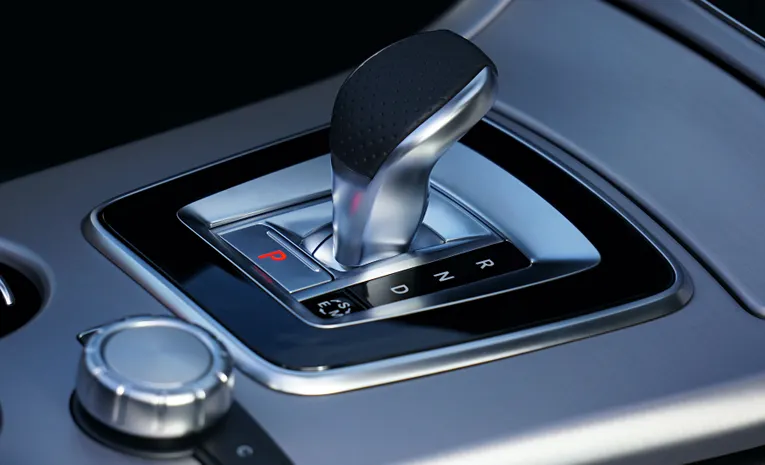
- Easier to drive: with no clutch pedal to manage, automatics are simpler for new drivers and less stressful in heavy traffic.
- Built for the future: hybrids and electric cars are almost exclusively automatic, so an automatic suits the cars of tomorrow.
- Smooth and relaxed: an automatic is calmer on motorways and in town, with no gear changes to think about.
- Often just as economical: modern automatics often match or beat manuals for fuel economy.
Cons:
- Higher purchase price: automatic versions typically cost more to buy than the equivalent manual.
- Costlier repairs: some automatic gearboxes are expensive to repair if they fail.
- Less driver involvement: drivers who enjoy changing gear themselves may find an automatic dull.
- Restricted licence: passing your test in an automatic restricts you to automatic cars only.
The Main Automatic Gearbox Types
Not all automatics work the same way, and the type matters more than most buyers realise. A torque converter is smooth and durable and suits larger cars. A CVT has no fixed gears, which can feel odd, and it can drone under hard acceleration. A dual clutch gearbox, such as a DSG or DCT, changes gear very fast but needs regular fluid services, with the DQ200 needing a service every 40,000 miles. An automated manual is cheaper but can feel jerky. Single speed gearboxes are used in electric cars. Our guide to CVT versus automatic gearboxes explains the most common choice in more detail.
| Type | How It Works | Best For | Watch Out For |
|---|---|---|---|
| Torque converter | Uses fluid to transfer drive smoothly | Larger cars and towing | Can use more fuel in older designs |
| CVT | No fixed gears, seamless ratios | Town driving and hybrids | Can drone under hard acceleration |
| Dual clutch DSG or DCT | Two clutches for fast changes | Quick, sporty driving | Needs fluid services, DQ200 every 40,000 miles |
| Automated manual | Manual gearbox shifted by actuators | Cheaper small cars | Can feel jerky at low speed |
| Single speed | One fixed ratio, no gear changes | Electric cars | Only found in EVs |
The Licence Rule That Decides It for Learners
The licence rules on GOV.UK are simple and they matter more than any other factor if you are learning to drive. Pass your test in a manual and you can drive both manual and automatic cars. Pass in an automatic and your licence carries category B code 78, which restricts you to automatics only. To upgrade later, you need to take a practical test in a manual car, with no theory retest needed, and electric cars count as automatics. The test itself is identical either way, with the same routes, marking and fee of £62 on a weekday or £75 in the evenings, at weekends or on bank holidays. Most learners should learn in a manual to keep both options open, unless they are certain they will only ever drive an automatic. If you go automatic, our guide on how to drive an automatic car covers the first steps.
Manual vs Automatic: Which Should You Choose?
| Factor | Better Choice |
|---|---|
| Lower upfront cost | Manual |
| Easier city driving | Automatic |
| Wider used car choice | Manual |
| Future proofing for EVs and hybrids | Automatic |
| Driver engagement | Manual |
| Learning with the most options | Manual |
Frequently Asked Questions
Is it harder to pass your driving test in a manual car?
No. DVSA figures show automatic pass rates are lower, at 43.9% compared with 50.3% for manual in 2024/25, and 44.6% compared with 52.3% in 2025/26. The gap reflects who takes each test, not a harder test, as many automatic learners are people who found a manual test difficult or who need a licence quickly.
Will manual cars disappear completely in the UK?
New manuals are becoming rare, with only 72 of 356 new models still offering one, but used manuals will remain for years. There is no ban on used cars. From 2030, new pure petrol and diesel cars cannot be sold, with mild hybrids included, while full hybrids and plug in hybrids can be sold until 2035, and every new car must be zero emission by 2035. Used cars are unaffected by these dates.
Are automatic cars more expensive to insure?
Automatics can sometimes cost slightly more to insure, mainly because they cost more to buy, not because of the gearbox itself. The car you choose matters far more than the gearbox, so compare quotes for your exact car. Our guides to the cheapest cars to insure for new drivers, car insurance groups explained and whether gap insurance is worth it explain what drives the price.
If you are weighing up greener options, see our guides on whether a hybrid car is worth it, hybrid versus electric cars and electric car range explained. Almost every hybrid and electric car is automatic, so the gearbox decision and the fuel decision now go together.